Rabbit Heatstroke: Signs, Prevention, and Safe Summer Setup
Published / Updated
This article is based on literature research by our editorial team and has not been individually reviewed by a veterinarian. References are listed at the end of the article.
Note: This article is not veterinary advice. It is an editorial summary of publicly available information on summer care for rabbits. If you suspect heatstroke, start first aid and contact a veterinarian immediately.
At what temperature does heat become dangerous for rabbits?
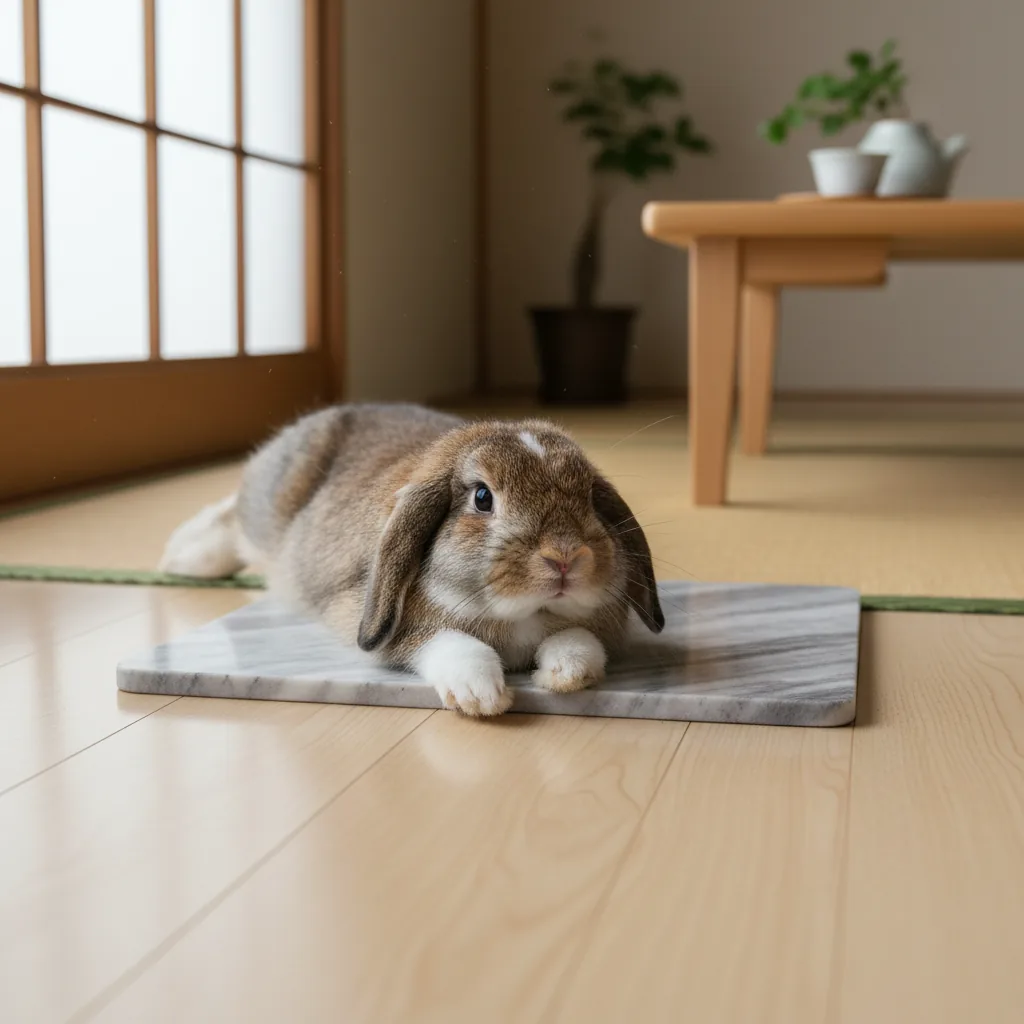
Rabbits are covered in fur and cannot sweat. Widely cited targets are 20–24°C as comfortable, and 25–28°C as the upper summer limit (anicom, BUNS). A body temperature above 40.5°C is considered dangerous heatstroke, and delayed care can be fatal (PDSA).
What signs show a rabbit is too hot?
If even one applies, start first aid and contact your vet.
- Rapid or open-mouth breathing: panting with the mouth open
- Drooling: wet fur around the mouth and chin
- Hot, bright-red ears: ears feel extremely warm and engorged
- Weakness or uncoordinated movement: cannot stand or respond normally
- Seizures or reduced consciousness
What can I do at home if I suspect heatstroke?
- Gently cool ears and body with a damp (not icy) towel — the ears dissipate heat
- Do not submerge in cold water, as it can cause shock (PDSA)
- Move the rabbit to a cooler room
- Call the vet immediately
- Stop cooling if the rabbit starts shivering
How should I set up the room in summer?
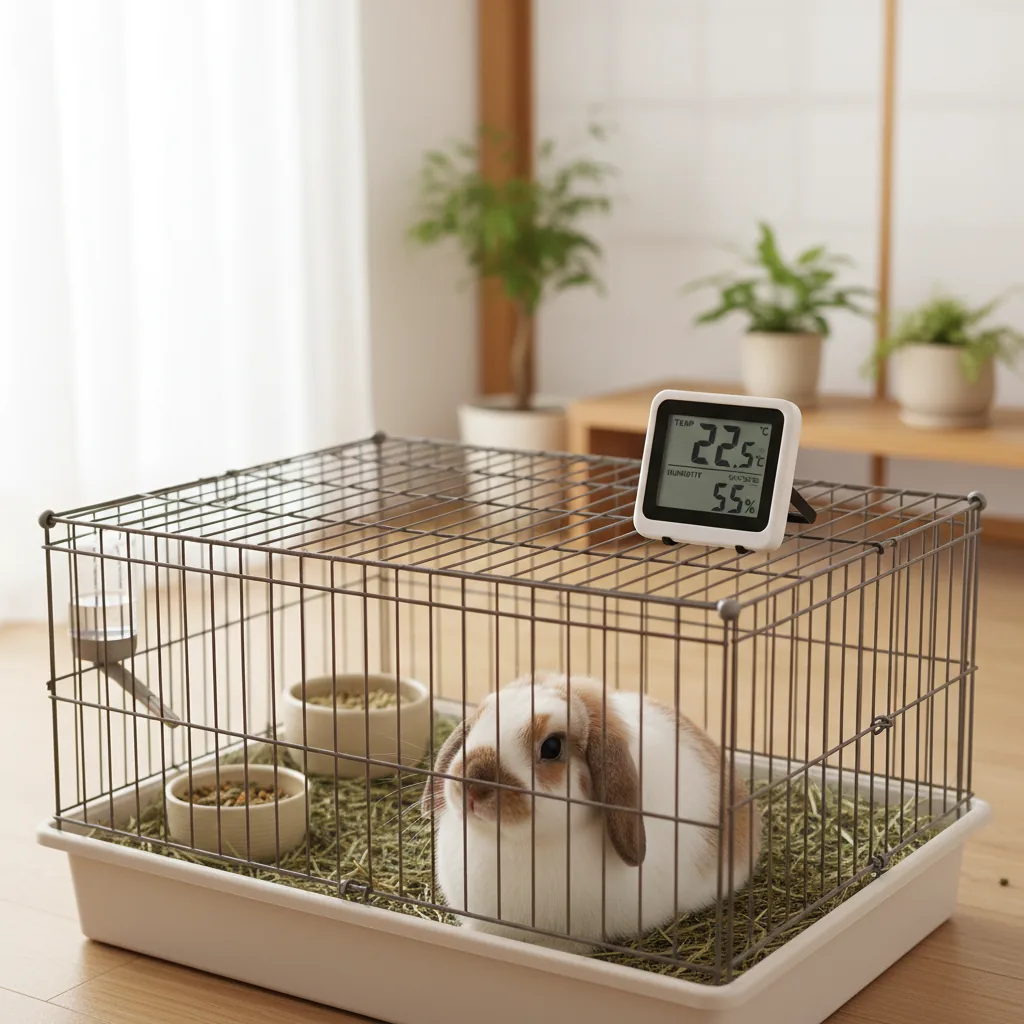
- Keep the AC on at 25–28°C — also overnight if the room would otherwise exceed 28°C
- Keep humidity at 40–60%
- Put the thermo-hygrometer at cage height, not on a high shelf
- Avoid direct sunlight and window-adjacent cage placement
- Supplement with marble cooling mats or aluminum cooling plates
How do I keep my rabbit safe while I am out?
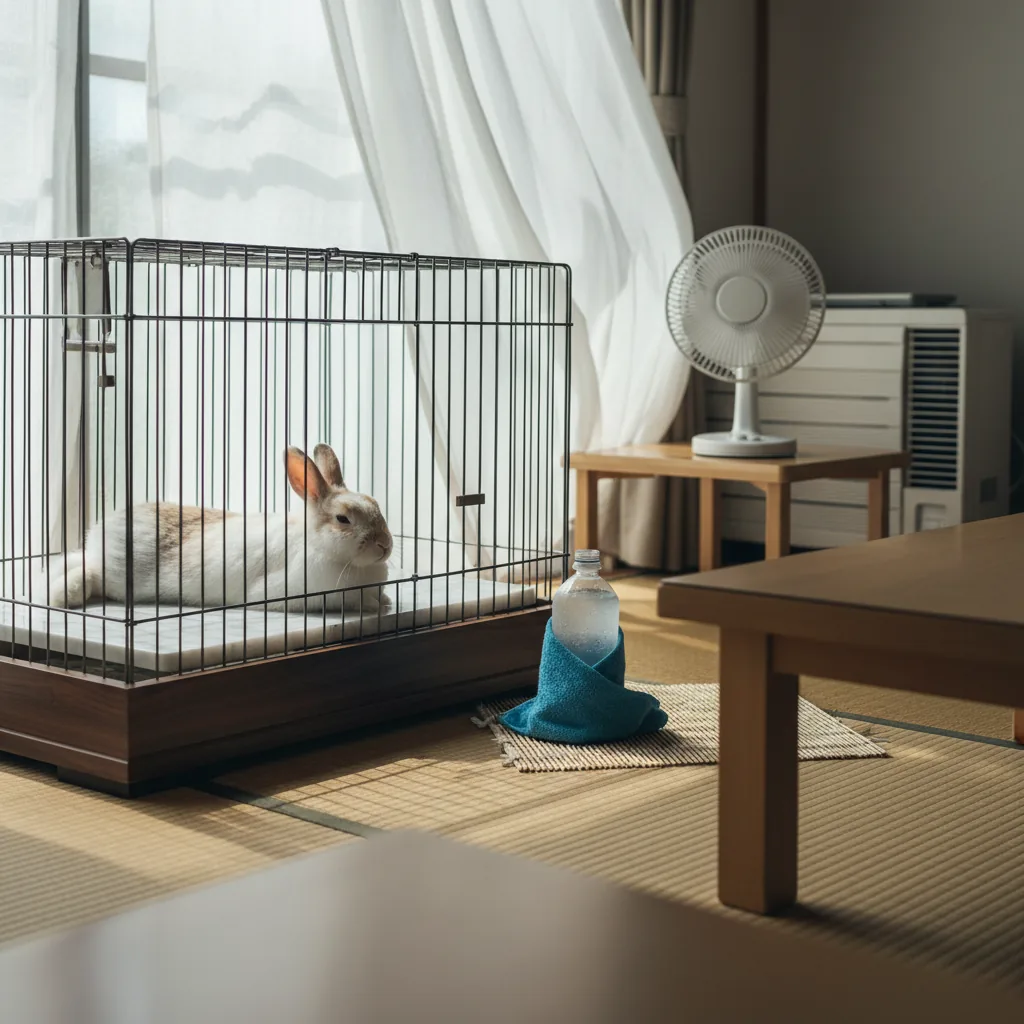
- Do not turn off the AC — re-cooling the room takes a long time
- For power-outage backup, place a towel-wrapped ice pack or frozen bottle outside the cage
- Use a circulator for air circulation, but do not blow directly on the rabbit
- A fan alone does not cool a rabbit, since rabbits do not sweat
What kind of vet should I line up in advance?
- Confirm the clinic handles exotic animals before summer
- Know after-hours and weekend options, and keep the numbers somewhere instantly accessible
- If you are new to rabbit care, build a shortlist of clinics in advance
Daily tracking helps you spot signs early
Changes in appetite, droppings, and water intake can be early signals of heat stress. Knowing your rabbit's daily baseline is the most powerful tool for noticing subtle changes.
The usagi Diary app lets you log weight, food, and droppings in about 30 seconds a day.
Each season calls for different measures. See Rabbit Winter Care for the cold months and Rabbit Rainy Season Care for humidity. If appetite changes worry you, see 5 Things to Observe When Your Rabbit Isn't Eating.
Keep the record in the usagi Diary app
The log you keep is what you show the vet when something changes. Available on iPhone and Android.
Frequently asked questions
What room temperature is dangerous for rabbits?
Above 28°C is considered danger territory, with 18–24°C cited as the comfortable range. High humidity adds to the strain, so check both temperature and humidity.
What are the signs a rabbit is too hot?
Hot ears, fast shallow breathing, lying stretched out and not moving, and reduced appetite. Rabbits cannot sweat and release heat through their ears, so ear temperature is a useful clue.
What should I set the air conditioning to?
Aim for an actual room temperature of roughly 24–26°C. Judge by the measured temperature at cage height rather than the number on the remote.
Should I leave the air conditioning on when I go out?
In summer, leaving it running is advised. Guard against outages by keeping the cage out of direct sunlight and offering more than one cool retreat.
Do cool packs and aluminium plates work?
They help as a supplement but do not replace managing room temperature. Always let the rabbit move away from them, so provide both a cooled spot and a normal one.
Related articles
Spotting Dental Trouble in Rabbits: Eating, Drooling, Face
Rabbit Weight: Weekly Weighing and Reading the Change
Rabbit Poop Guide: Size, Count and Caecotrophs
Autumn Moulting in Rabbits: Diet, Weight and Warning Signs
Rabbit Shedding Care: Brushing and the Real GI Stasis Risk
5 Things to Observe When Your Rabbit Isn't Eating