Rabbit Shedding Care: Brushing and the Real GI Stasis Risk
Published / Updated
This article is based on literature research by our editorial team and has not been individually reviewed by a veterinarian. References are listed at the end of the article.
Note: This article is not veterinary advice. It is an editorial summary of publicly available information on rabbit shedding-season care. If you notice appetite loss or a sudden drop in fecal output, please contact a rabbit-savvy exotic veterinarian as soon as possible.
The bottom line: brush less fur in, keep the gut moving
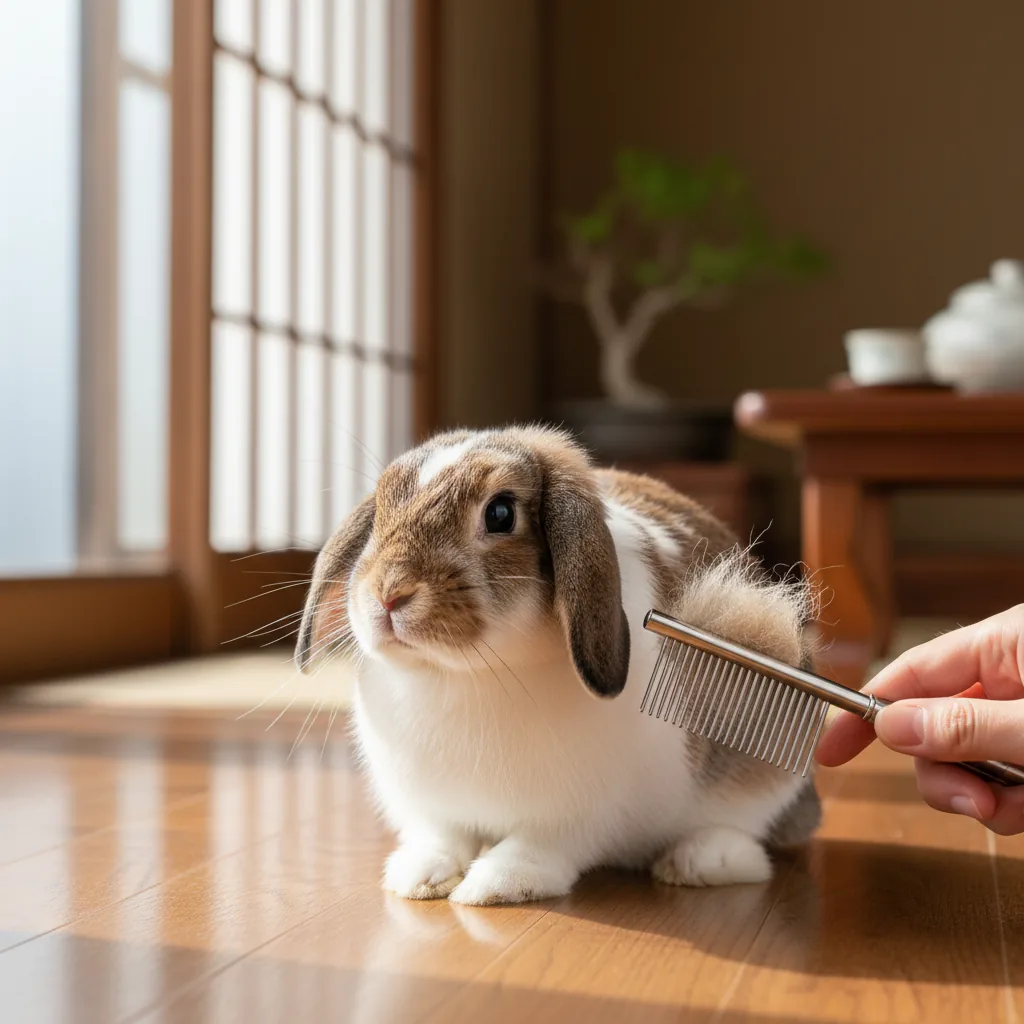
It is often said that the danger of shedding season is the fur a rabbit swallows while grooming. But modern veterinary references describe it differently: fur build-up is the consequence of slowed gut motility, not its cause (Oglesbee & Lord, 2020).
That gives caregivers two parallel jobs:
- Reduce the amount of fur ingested through regular brushing
- Keep gut motility healthy with hay, water, exercise, and reduced stress
If a rabbit goes 12 or more hours without eating, or stops producing droppings, that is a sign to skip home care and contact a veterinarian (HRS / RWAF).
When and how often do rabbits shed?
Most pet rabbits go through two main moults a year:
- Spring (March – May): winter coat to summer coat
- Autumn (September – November): summer coat to winter coat
Each moult typically lasts about one to two weeks. The House Rabbit Society describes the cycle as roughly every three months, alternating between heavy and light sheds across the year.
RWAF adds that domestic rabbits living indoors under artificial light and climate control may shed almost constantly, because the seasonal cues that trigger a clean moult are blunted. If your rabbit "always seems to be losing fur," that is part of why.
Individual rabbits vary widely. Some shed in a dramatic few-day burst; others spread it out over weeks. Thin patches around the ears, back, or hindquarters can look alarming, but as long as the skin underneath is calm — no redness, scabs, or flaking — this is generally considered normal.
Rethinking "hairballs": fur is the consequence, not the cause
Many older guides describe hairball disease as "swallowed fur clumping in the stomach and blocking it." The current standard textbook Ferrets, Rabbits, and Rodents: Clinical Medicine and Surgery (Quesenberry & Carpenter, 4th ed., 2020) puts it differently. In the chapter by Oglesbee and Lord:
The terms "hairball" and "trichobezoar" are erroneously used. Hair accumulation is a symptom of impaired motility, not its cause.
When the gut is moving normally, fur swallowed during grooming travels along with food and is steadily passed in the droppings. The problem starts when gut motility itself slows down, for any reason — diet, dehydration, stress, pain, dental disease, infection. Once motility slows, fur, fiber, and food sit longer in the stomach. Water is absorbed out of the contents, things compact, the discomfort kills appetite, and reduced food intake further slows the gut. That cycle is GI stasis.
So the real shedding-season project is not just "remove fur." It is keeping the gut moving. Brushing still helps — less fur in means less load on the system — but it is a supporting action, not the main lever.
Brushing: how often, what tools, what to avoid
Frequency, drawing on HRS and RWAF guidance:
- During a moult, ideally daily. Several short sessions are gentler on the rabbit than one long one (RWAF)
- Outside a moult, about once a week for short-haired breeds, two to three times a week for long-haired breeds
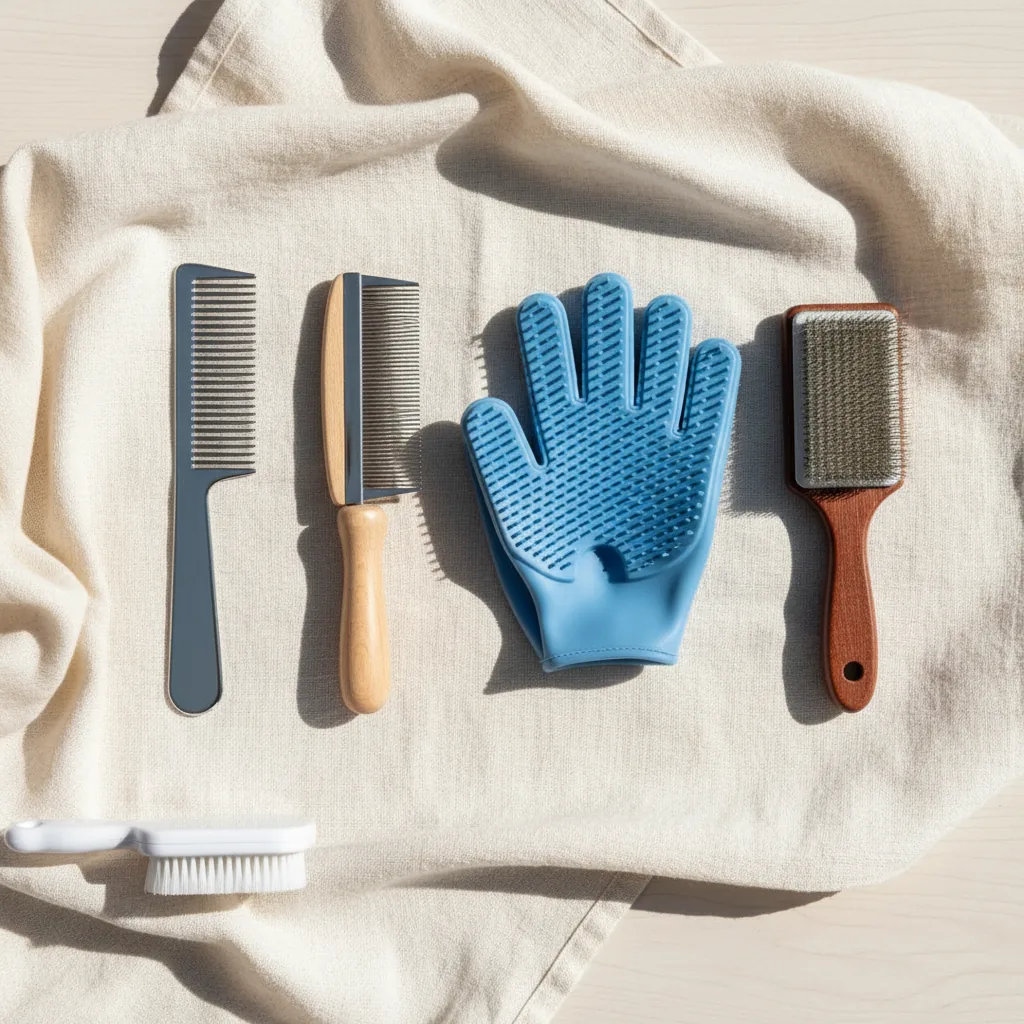
Tool choices matter, because rabbit skin is thin and tears easily. Wide-toothed combs, cat flea combs, cat moulting combs, and silicone grooming gloves are the usual staples. Slicker brushes are often discouraged — RWAF flags them as easy to catch and scratch the skin.
Posture matters too. Rabbits are ground-dwelling animals, so sitting on the floor with them is calmer than holding them up at human height (RWAF). Even a hand stroke pulls a surprising amount of loose fur (HRS).
If you find a true mat, do not cut it out yourself. Rabbit skin is paper-thin and easily nicked; mat removal is best left to a vet or experienced groomer. Long-haired breeds such as Holland Lops or Lionheads tend to have fewer hairball events when their coat is trimmed to about one inch (2.5 cm) or less, per HRS.
Bathing is generally not recommended. The stress involved can trigger serious health events.
Daily care that keeps the gut moving (the real backbone)
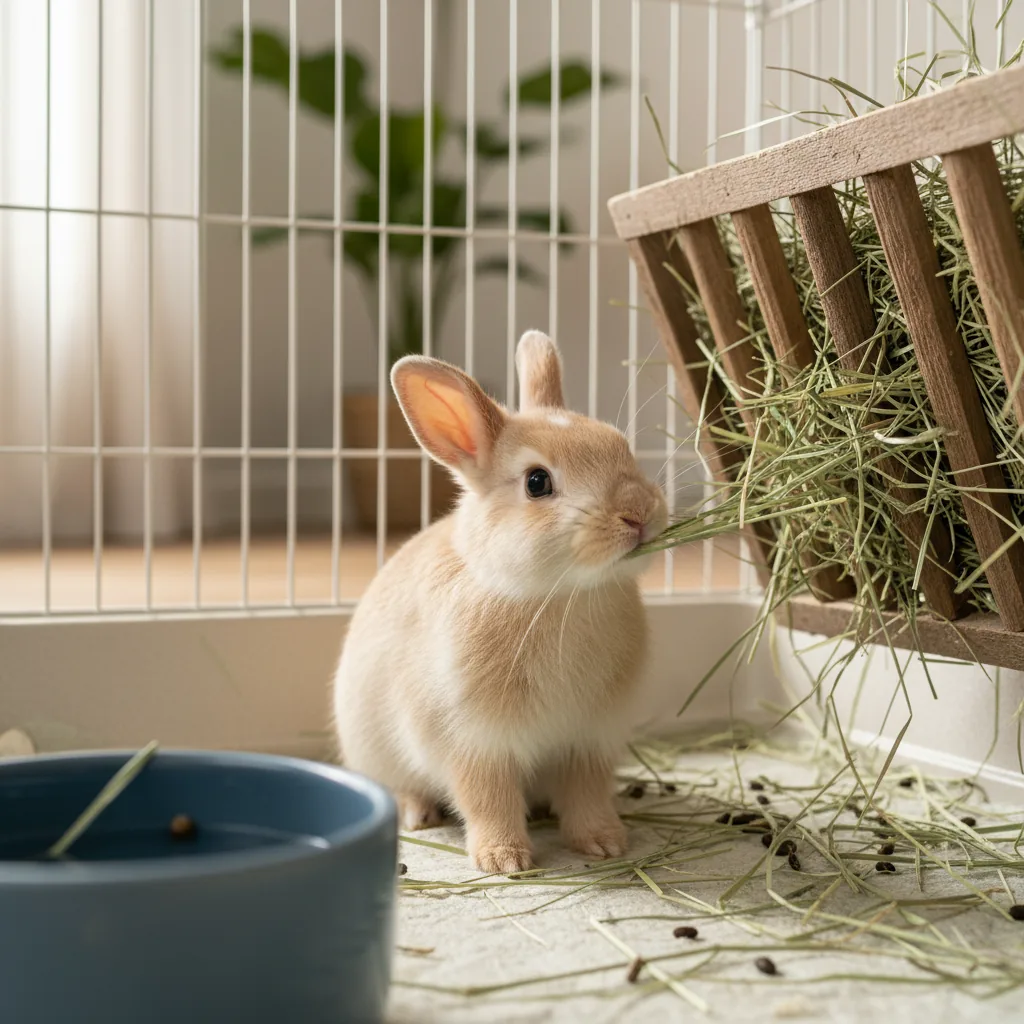
Brushing reduces the input of fur. The rest of the work is about preserving normal gut motility. Oglesbee and Lord state plainly that the main driver of normal intestinal motility in rabbits is large quantities of indigestible long-stem fiber.
- About 90% of the diet should be hay — long-stem grass hay such as timothy first cut, available constantly (HRS, RWAF). Feeding and weight through a moult are covered in "Autumn Moulting in Rabbits: Diet, Weight and Warning Signs", and fur-strung droppings in "Rabbit Poop Guide: Size, Count and Caecotrophs"
- Steady water access. Bowls tend to encourage higher intake than nozzle bottles in some studies, which matters more heading into summer
- Several hours of out-of-cage time daily supports gut motility
- Postpone rearrangements, moves, or noisy events when possible during a heavy moult
- Go easy on pellets and treats. High-carbohydrate, low-fiber inputs can disrupt cecal microflora
Spring shedding overlaps with the run-up to humid Japanese summers. Heat is another major motility stressor — see also our guide to signs of heatstroke and how to prevent it.
Signs to watch during shedding season
A daily glance at these five points usually catches changes early:
- Appetite: is hay being eaten at the usual pace and volume?
- Droppings: are pellets the usual size, in the usual quantity? Are any linked together by fur ("string of pearls")? Has output stopped?
- Water intake: is the bowl or bottle going down at the usual rate?
- Energy: is the rabbit relaxing in the usual spots, or hunched and still?
- Belly: is touch tolerated as usual, or does it feel tight or gassy?
A rabbit that "looks fine" but has not eaten can still be in trouble. For a deeper checklist, see Five things to watch when your rabbit stops eating.
When to call a veterinarian
Any of the following is a good moment to skip home care and reach for the phone:
- No food and no droppings for 12 hours or more (a possible sign of GI stasis — HRS / RWAF)
- Hunched, motionless posture, or tooth grinding (often a pain signal)
- Belly is tense, painful to touch, or feels gassy
- Lethargy, trembling, or a body that feels cold
Practical preparation helps when it counts: identify a rabbit-savvy exotic veterinarian before the first emergency, know an after-hours option, and keep the carrier somewhere you can grab quickly.
A daily log makes shedding season easier to read
Most "is this normal?" anxiety in shedding season comes from not knowing the baseline. Once you know how much your rabbit normally eats, drinks, and poops, small deviations become visible early.
usagi Diary lets you log meals, droppings, and weight in about 30 seconds. Adding a quick photo memo of the day's loose-fur volume gives you a year-over-year picture of your rabbit's moult pattern. Spring is a good moment to start.
Keep the record in the usagi Diary app
The log you keep is what you show the vet when something changes. Available on iPhone and Android.
Frequently asked questions
When do rabbits moult?
Roughly four times a year, with spring and autumn known as the big moults when shedding is heaviest. One to two weeks is a rough guide, though it varies by individual.
How often should I brush during a moult?
Daily is preferred while shedding is heavy. Rabbits groom themselves and swallow loose fur, so the aim is to remove as much as possible first.
Is hair the cause of GI stasis?
Current veterinary thinking treats hair as a result rather than a cause. Fur remains in the stomach because gut movement has slowed, so hay, water and exercise matter more than the fur itself.
Is reduced appetite normal during a moult?
Rabbits usually eat more during a moult because it costs energy, so a drop in appetite warrants attention. Not eating for 12 hours is a threshold for seeing a vet.
Can I reduce the amount of shedding?
Moulting itself cannot be stopped — it is a normal cycle. Removing loose fur by brushing and cleaning the room and cage frequently is the practical response.
Related articles
Spotting Dental Trouble in Rabbits: Eating, Drooling, Face
Rabbit Weight: Weekly Weighing and Reading the Change
Rabbit Poop Guide: Size, Count and Caecotrophs
Autumn Moulting in Rabbits: Diet, Weight and Warning Signs
Rabbit Heatstroke: Signs, Prevention, and Safe Summer Setup
5 Things to Observe When Your Rabbit Isn't Eating
References
- Rabbit Grooming / House Rabbit Society (accessed 2026-05-03) Link
- Moulting / Rabbit Welfare Association & Fund (RWAF, UK) (accessed 2026-05-03) Link
- Gastrointestinal Diseases of Rabbits (Quesenberry & Carpenter, 4th ed., 2020) / Oglesbee BL, Lord B. In: Ferrets, Rabbits, and Rodents: Clinical Medicine and Surgery, 4th ed. Elsevier (accessed 2026-05-03) Link