Choosing Hay for Rabbits: Cuttings, Grass Types and Alfalfa
Published
This article is based on literature research by our editorial team and has not been individually reviewed by a veterinarian. References are listed at the end of the article.
Please note: This article is not veterinary advice. It is reference information compiled by our editorial team from published books and organisations. If intake falls, droppings shrink, or anything else concerns you, please see a vet experienced with rabbits promptly.
Which hay should I actually buy for my rabbit?
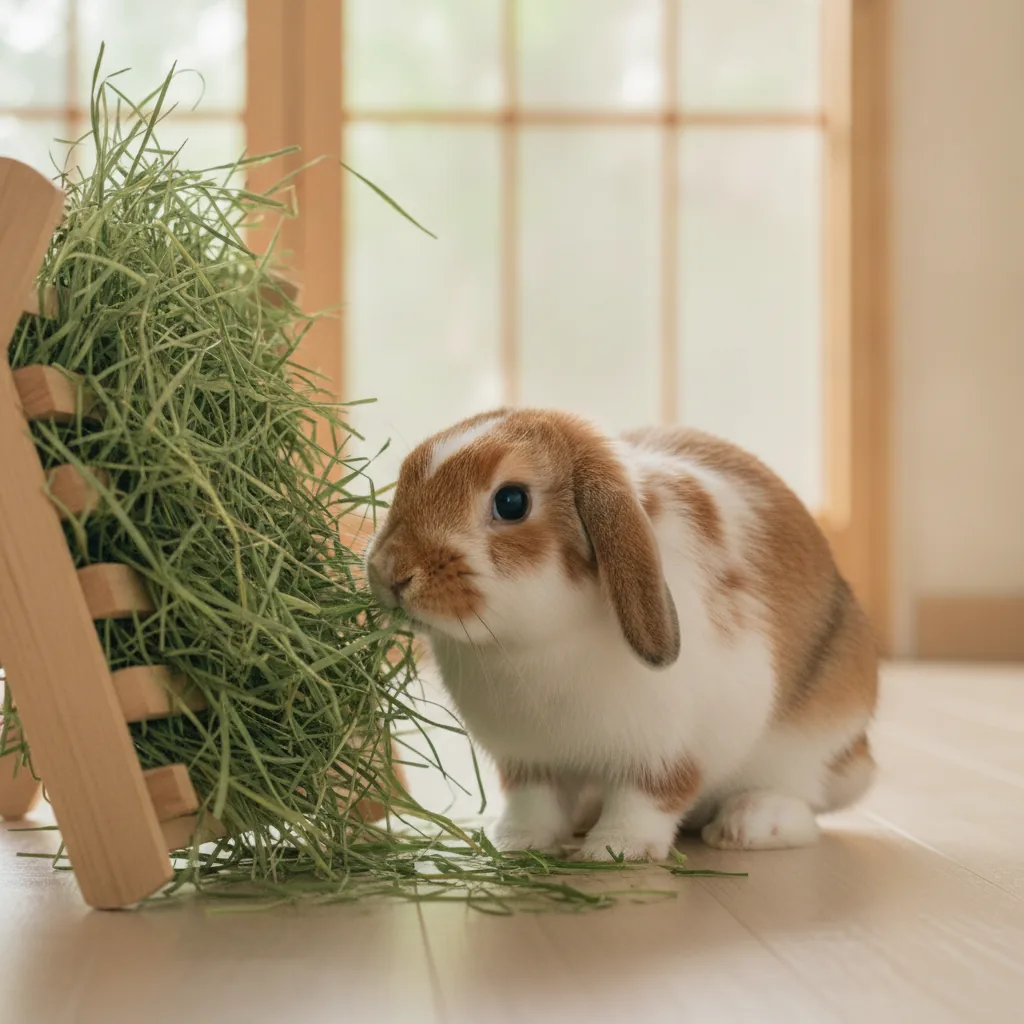
For a healthy adult, first-cutting timothy is the default. Its coarseness and fibre work on both the teeth and the gut.
The House Rabbit Society names "timothy hay and other grass hays" as suitable for adults. RWAF puts hay or grass at 85% of the diet, says you cannot give a rabbit too much hay, and recommends an unlimited supply.
In other words, the foundation is less about the brand than about hay always being within reach. Only then does the question of cutting and coarseness arise.
Why is hay the staple? Are pellets not enough?
Because fibre keeps the gut moving and chewing wears down teeth that never stop growing. Pellets do not substitute.
The Japan Animal Medical Center, a veterinary clinic in Tokyo, explains that fibre "balances the gut flora and keeps the digestive tract moving".
On teeth it writes that rabbits have teeth which grow continuously throughout life, so chewing hard material wears them down and keeps them at a workable length.
It also spells out the reverse. If a rabbit eats only food it can manage without properly grinding its molars together, that friction is insufficient and malocclusion follows.
The House Rabbit Society likewise says roughage reduces the danger of hairballs and blockages and helps grind down constantly growing teeth. RWAF adds that grass, and hay made from grass, require a particular chewing action that wears the molars properly. The number of chews is itself the point.
Sources state pellet amounts differently: RWAF gives 15g per kg of body weight per day, while the Japan Animal Medical Center describes 1.5 to 2.5% of body weight as ideal for pellets and vegetables. Either way, hay holds the staple position. On fibre and fur, see Rabbit Shedding Care: Brushing and the Real GI Stasis Risk.
What is the difference between first, second and third cutting?
It is when the crop is cut. First cutting is coarse and high in fibre; later cuttings are softer but lower in fibre.
The anicom encyclopedia describes them as follows.
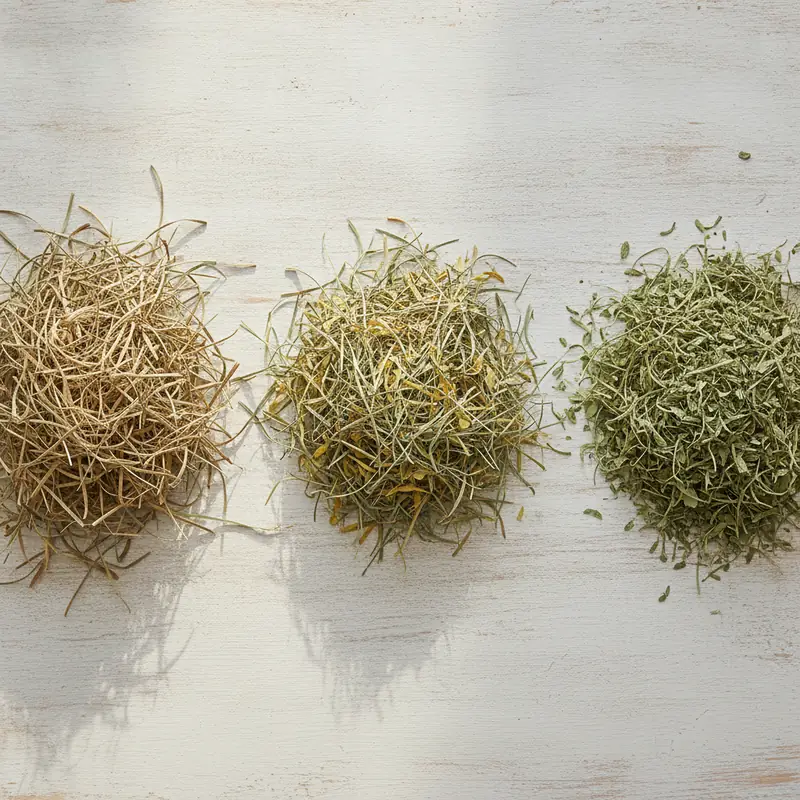
First cutting is harvested from spring into early summer. The stems are young, so it has coarseness and plentiful fibre, along with minerals drawn up from the soil.
Second cutting comes from stems that regrew and were harvested from summer into autumn. Grass and leaves are finer and softer and palatability rises, while crude protein and crude fibre decline.
Third cutting is what grows back after the second cutting is taken.
For teeth, first cutting has the advantage. anicom writes that timothy is high in silica, and that chewing it thoroughly wears the teeth down and keeps them at a suitable length.
Palatability and fibre pull in opposite directions. Softer hay is eaten more readily, but chewing count and fibre both fall. Starting with first cutting and adding something softer only if it goes untouched is the easier order to work in.
Can I feed alfalfa?
Not to a healthy adult. It is a legume rather than a grass, and it is high in calories and calcium.
RWAF explains that alfalfa is not a grass hay but a legume, similar to peas or lentils, and that it is very high in carbohydrates, protein and calcium, with fibre lower than in grass hay.
How far it applies differs between sources.
RWAF limits it tightly: something only youngsters or pregnant and lactating females should have, and not regularly or in any great amount, with calcium levels in particular too high for adults.
The House Rabbit Society is somewhat broader, saying to offer alfalfa only to babies, nursing mothers, and elderly or injured rabbits. anicom likewise writes that alfalfa may be added for young rabbits, pregnant rabbits and thin elderly rabbits that need richer nutrition.
What all three share is young rabbits and pregnancy or lactation. Whether elderly or underweight rabbits belong on the list differs by source. anicom also warns that alfalfa is nutritionally rich enough to cause obesity in a fully grown rabbit, so whether to add it for a senior depends on body condition and any existing illness. Ask your vet before deciding.
How do other grass hays fit in?
Orchard and other grasses are listed as options for a rabbit that will not take timothy.
anicom lists oat hay, Italian ryegrass, Bermuda grass and orchard grass among grass hays other than timothy. The House Rabbit Society's phrase "timothy hay and other grass hays" makes the same point: timothy is not the only right answer.
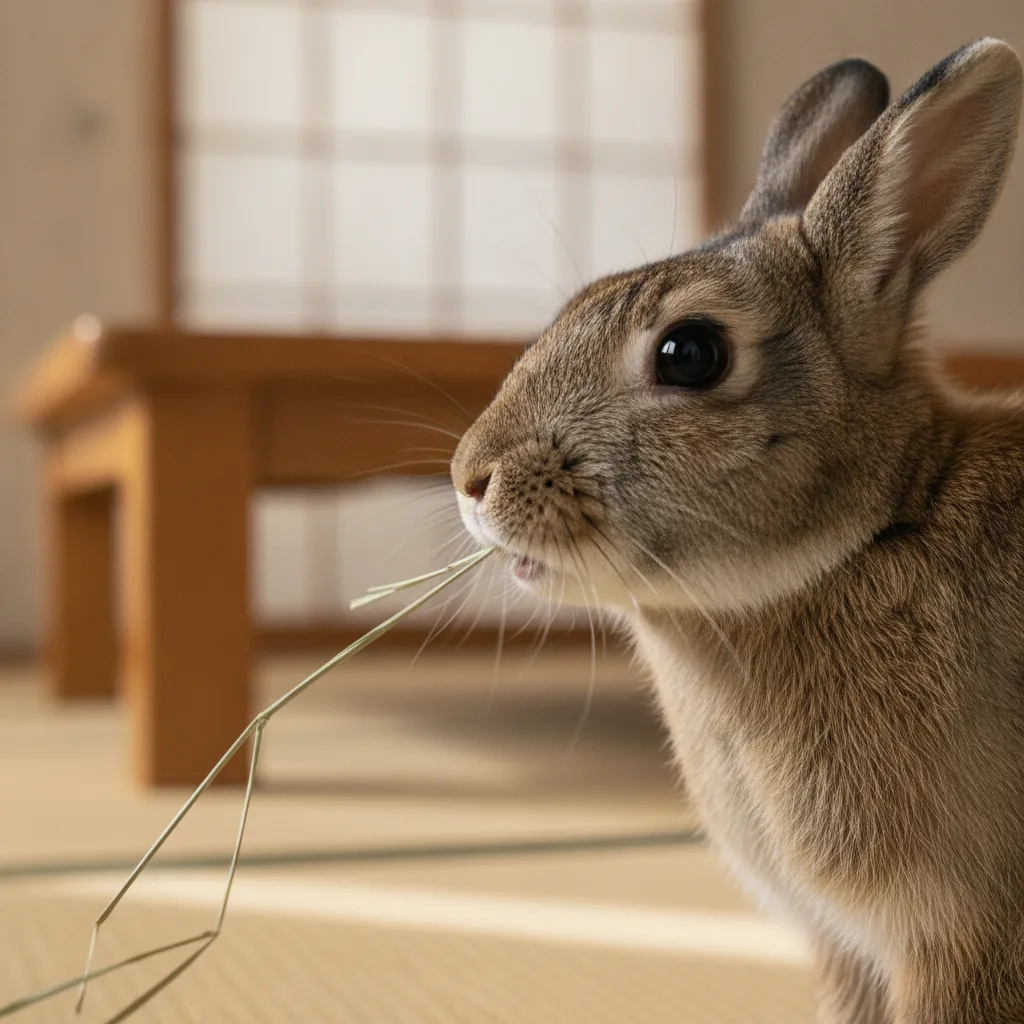
Pressing changes coarseness too. According to anicom, single-pressed hay is baled in the field with stems and heads largely uncrushed, leaving long stems, while double-pressed hay is compressed again by machine so stems and heads are flattened and softened.
Widening the choice is about palatability. If you chase appetite at the cost of fibre and coarseness, the reason hay is the staple starts to disappear. On balancing treats, see Can Rabbits Eat Bananas?.
What if my rabbit stops eating hay?
If intake drops and stays down, consider a vet visit. Cycling through brands while waiting is what to avoid.
Sometimes it is simply taste. But less hay eaten means less fibre reaching the gut. The Japan Animal Medical Center describes gut stasis as a condition where the digestive tract slows and food stops moving through.
If droppings are small, dry or fewer in number alongside it, do not treat this as a preference problem. The observation steps are in Five Things to Check When a Rabbit Stops Eating.
When you do change type, avoid swapping everything at once. Mix a little of the new into the familiar and watch intake and droppings as you go.
Daily records reveal changes in how hay is eaten
Logging intake alongside droppings makes it easier to separate a preference from a change in health.
Hay gets topped up daily, so changes in how fast it goes down rarely stick in memory. The usagi Diary app records food, droppings and weight in around thirty seconds, so you can show a vet when eating began to change.
During a moult, not letting hay run out matters especially. See also Autumn Moulting in Rabbits: Diet, Weight and Warning Signs.
Individuals vary. When in doubt, prioritise asking your vet.
Keep the record in the usagi Diary app
The log you keep is what you show the vet when something changes. Available on iPhone and Android.
Frequently asked questions
Is first or second cutting hay better for rabbits?
First cutting is the usual default for healthy adults. The Japanese anicom encyclopedia describes it as coarser and richer in fibre, and notes that chewing it properly keeps the teeth worn to a suitable length. Second cutting is softer but lower in crude fibre.
Can I feed my rabbit alfalfa?
Not a healthy adult. RWAF points out that alfalfa is a legume rather than a grass hay, and that its calcium levels are too high for adults. It is described as suitable only for youngsters and pregnant or lactating females.
How much hay should a rabbit get per day?
Rather than setting an amount, keep it from running out. RWAF says you cannot give a rabbit too much hay and recommends an unlimited supply. As a share of the diet, the guide is around 85%.
My rabbit will not eat timothy. Should I switch hay?
Other grasses such as orchard grass are listed as options. But if intake drops and stays down, that is not necessarily a matter of taste, so it is worth contacting your vet.
Single-pressed or double-pressed hay?
According to anicom, single-pressed hay keeps long stems largely intact, while double-pressed hay is compressed further so stems and heads are crushed and softened. Single-pressed suits keeping the chewing count up.
Related articles
References
- うさぎのチモシー(牧草)はなにを選べばいい?年齢や性別、病気によって変えるべき?1番刈りと2番刈りの違いは? [Which timothy hay should you choose? Does it change with age, sex or illness? What is the difference between first and second cutting?] / anicom Encyclopedia of Living with Rabbits (Anicom Insurance, Japan) (accessed 2026-09-15) Link
- うさぎに牧草は必要か [Do rabbits need hay?] / Japan Animal Medical Center (veterinary clinic, Tokyo) (accessed 2026-09-15) Link
- Alfalfa vs Grass Hay for Rabbits: Feeding Guide / Rabbit Welfare Association & Fund (RWAF, UK) (accessed 2026-09-15) Link
- What to feed pet rabbits / Rabbit Welfare Association & Fund (RWAF, UK) (accessed 2026-09-15) Link
- Rabbit Diet & Nutrition: Safe Foods and Treats for Bunnies / House Rabbit Society (US) (accessed 2026-09-15) Link