Rabbit Rainy Season Care: Humidity, Mould, and Appetite Loss
Published / Updated
This article is based on literature research by our editorial team and has not been individually reviewed by a veterinarian. References are listed at the end of the article.
Note: This article is not veterinary advice. It is an editorial summary of publicly available information on rabbit care during the Japanese rainy season (tsuyu). If you notice appetite loss, a sudden drop in droppings, or wetness around the rear end, please contact a rabbit-savvy exotic veterinarian as soon as possible.
The bottom line: humidity, not temperature, is the main story
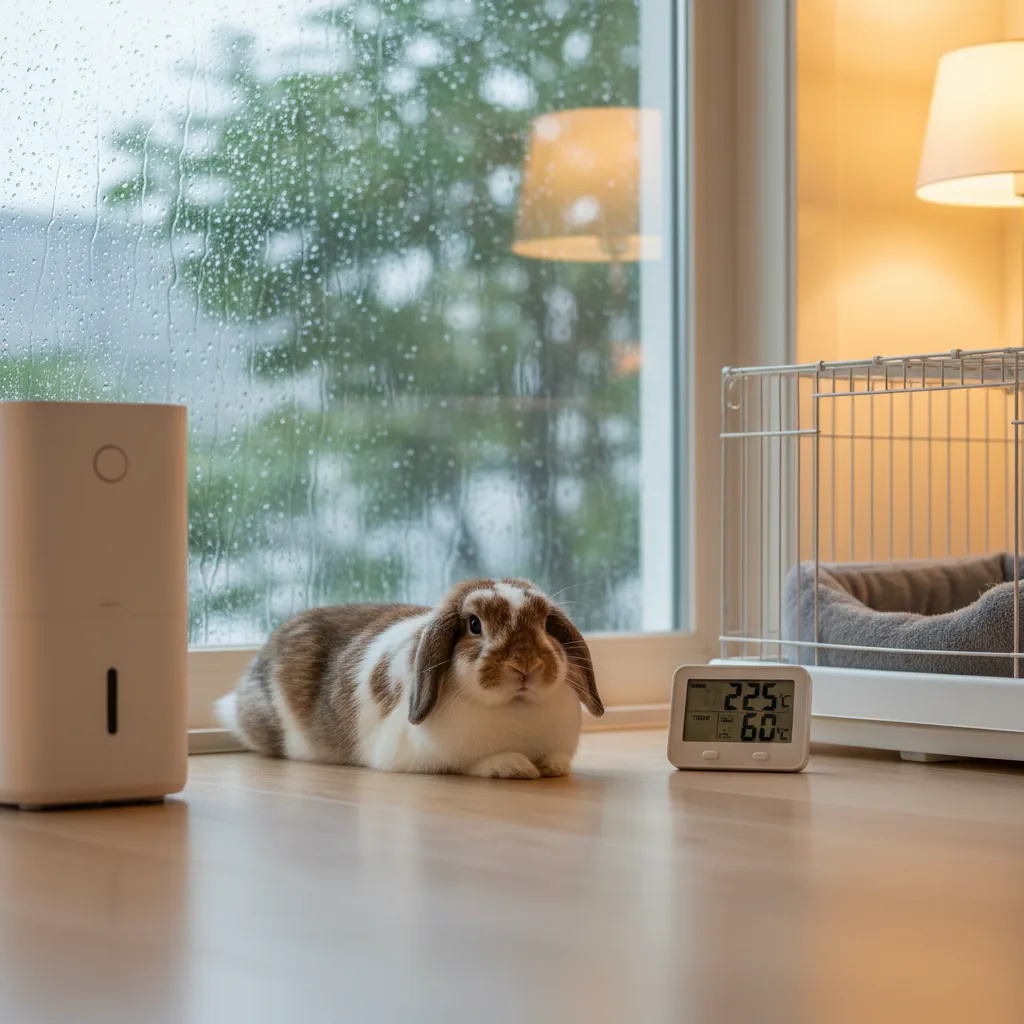
The comfortable humidity range for rabbits is generally cited as 40 to 60 percent (anicom). Veterinary writers note that above 60% humidity, rabbits begin showing signs of distress such as appetite loss and soft stools.
Tokyo's June–September average humidity exceeds 70%, peaking around 80%. So during tsuyu, Japanese rabbits sit in air that is 20 to 30 points wetter than their comfort zone, almost continuously.
Three risks rise together: digestive (appetite loss, soft stool), respiratory (mould spore exposure), and skin / flystrike (fly-laid eggs in damp fur). All three are largely preventable with environment management.
If your rabbit goes 12 hours without eating, stops producing droppings, or has a wet, dirty rear end, skip home care and contact a veterinarian.
Why tsuyu is hard on rabbits — moult, pressure, and mould stack up
Tsuyu (May–June) layers several stressors on top of each other.
First, moult overlap. Most pet rabbits are still in heavy spring shed when humidity ramps up. With more fur passing through the GI tract and humidity slowing motility, the load doubles. Oglesbee & Lord (2020) frame fur accumulation as a consequence of impaired GI motility — environmental stressors like temperature and humidity are part of what causes that motility to slow. We covered this in Rabbit shedding season care.
Second, atmospheric pressure swings. The low-pressure systems that drive tsuyu can affect autonomic function in animals as well as humans, with appetite and activity sometimes dipping (saito & kakuno, Rabbit Medicine).
Third, mould and dust mites. Mould thrives in 25–30°C × 50–80% humidity × poor airflow — exactly the conditions of a tsuyu-era Japanese living room (anicom). Hay storage, bedding, and even pellet containers become breeding ground if untreated.
Treating tsuyu as a season where moult, pressure, and mould pile up — rather than just "muggy weather" — makes it easier to prioritise the right interventions.
Target ranges, and what tsuyu actually delivers
Aggregating veterinary and welfare sources, the practical targets are:
- Temperature: 18–24°C
- Humidity: 40–60% (rabbit comfort)
- Above 60%: distress more likely (vet column)
- Above 70%: digestive, respiratory, and skin risks rise visibly
Japanese tsuyu typically runs 22–26°C — not extreme on the thermometer — but with humidity at 75–85%. When owners say "it's not even that hot, but my rabbit lost appetite," the culprit is usually the humidity spike.
Place the thermo-hygrometer at rabbit-eye level, not at the ceiling or on top of the cage. The number you care about is the air your rabbit is actually breathing.
Three risks that rise during tsuyu
The three risks owners should keep in mind during tsuyu have different mechanisms, so the prevention angles differ slightly.
- Digestive (appetite loss, soft stools, diarrhoea) — high humidity stresses the cecal microflora, with appetite loss and soft stools surfacing. A vet column suggests that appetite loss or soft stool persisting around a week may be "humidity stress."
- Respiratory (sneezing, runny nose, laboured breathing) — in poorly ventilated rooms, mould spores, dust, and mite numbers rise, irritating the airways.
- Skin / flystrike (myiasis) — humidity, warmth, and a soiled rear are the three ingredients. PDSA notes that fly eggs hatch within hours and damage can become severe within a day, and recommends checking the rear end twice daily through warm humid months.
Flystrike escalates within hours, so prevention through environment is dramatically more efficient than reacting to symptoms. The next two sections cover the practical setup.
Room setup: dehumidifier, AC, and a hygrometer
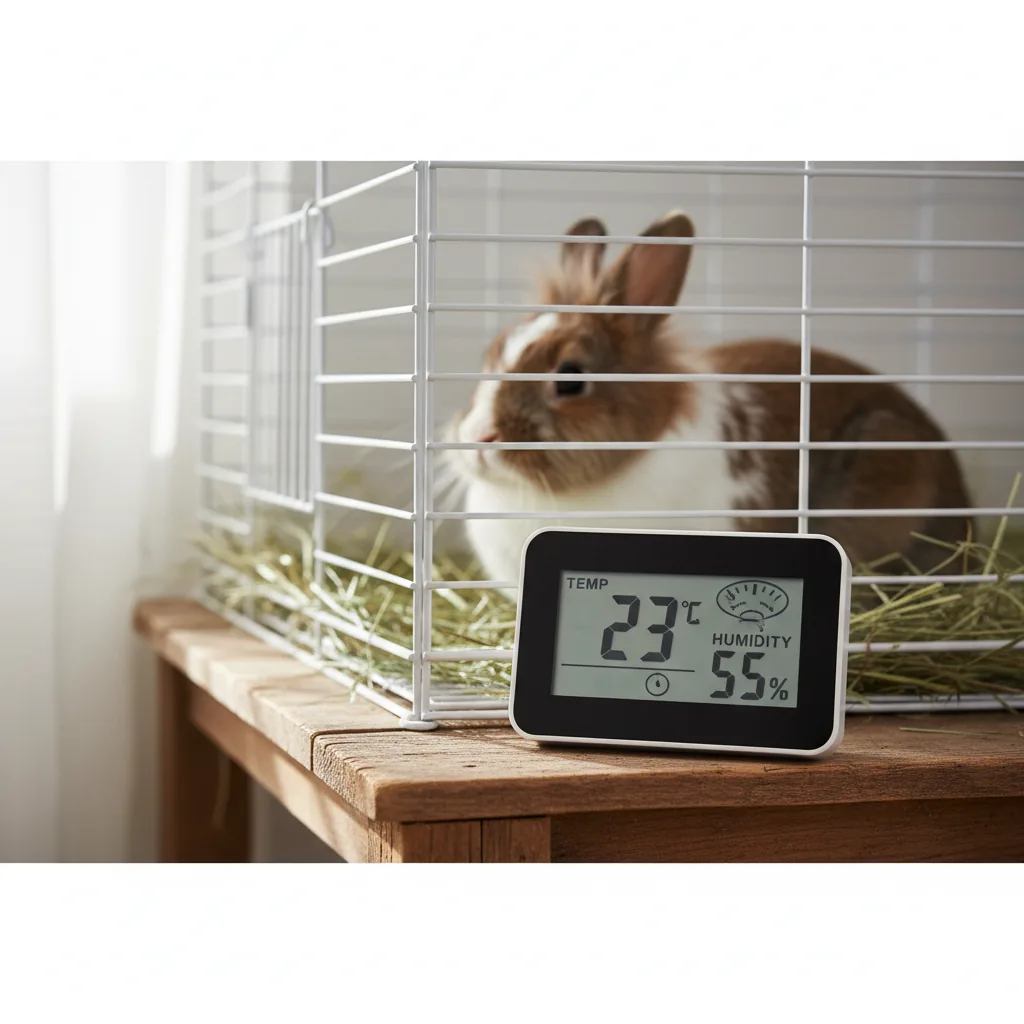
The aim during tsuyu is to keep humidity at or below 60%.
- A dehumidifier or your AC's "dry" mode is the main lever
- Some dehumidifiers warm the room slightly — pair with AC if so
- Place a hygrometer at rabbit-eye level — not at the ceiling
- Leave 3–5 cm of space between the cage and the wall for airflow (anicom)
- Avoid west-facing windows and direct sunlight
- Use a circulator for air movement, but never aim direct flow at the rabbit (same principle as our heatstroke guide)
Once humidity sits below 60%, mould growth slows substantially. AC cooling can over-cool the room early in tsuyu — start with dry mode, switch to cooling once mid-summer humidity-and-heat hits together.
Cage hygiene: clean more often during tsuyu
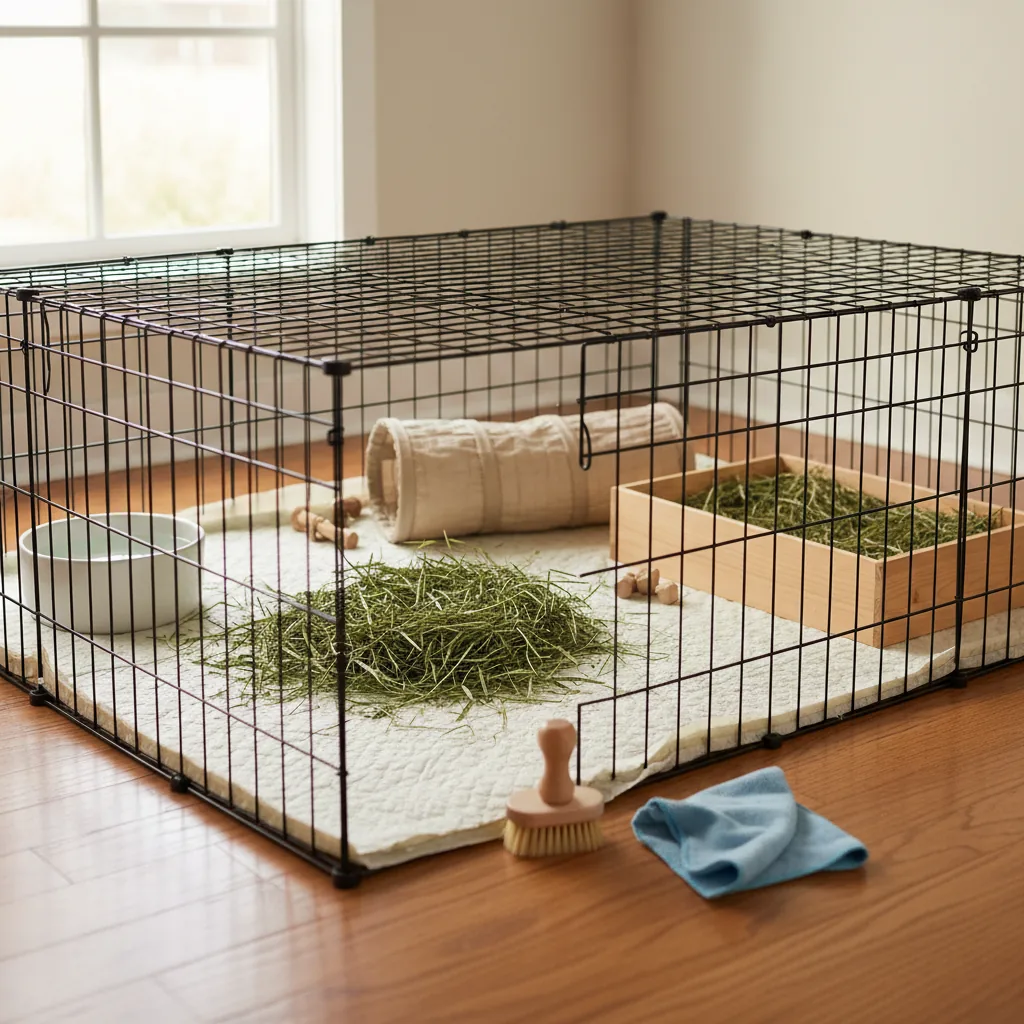
The flystrike-prevention triad is clean, dry, ventilated. During tsuyu, every condition that favours mould, flies, and mites is in motion — so cleaning frequency steps up.
- Soiled bedding, droppings, and urine should be removed the same day (PDSA)
- Wash pellet containers and water bowls/bottles with a sponge at least weekly, with periodic boiling-water rinses
- Store hay and pellets in airtight containers with desiccants
- Check the rear end twice a day; look for damp, dirty, or matted fur (PDSA)
- Long-haired breeds: trim the rear-end fur before and during tsuyu (PDSA)
If anything, err on the side of "too clean." Maintaining the dry-season routine through tsuyu often pushes cage humidity past 75% within days, especially with food residue and damp bedding.
Food: managing hay and pellet storage
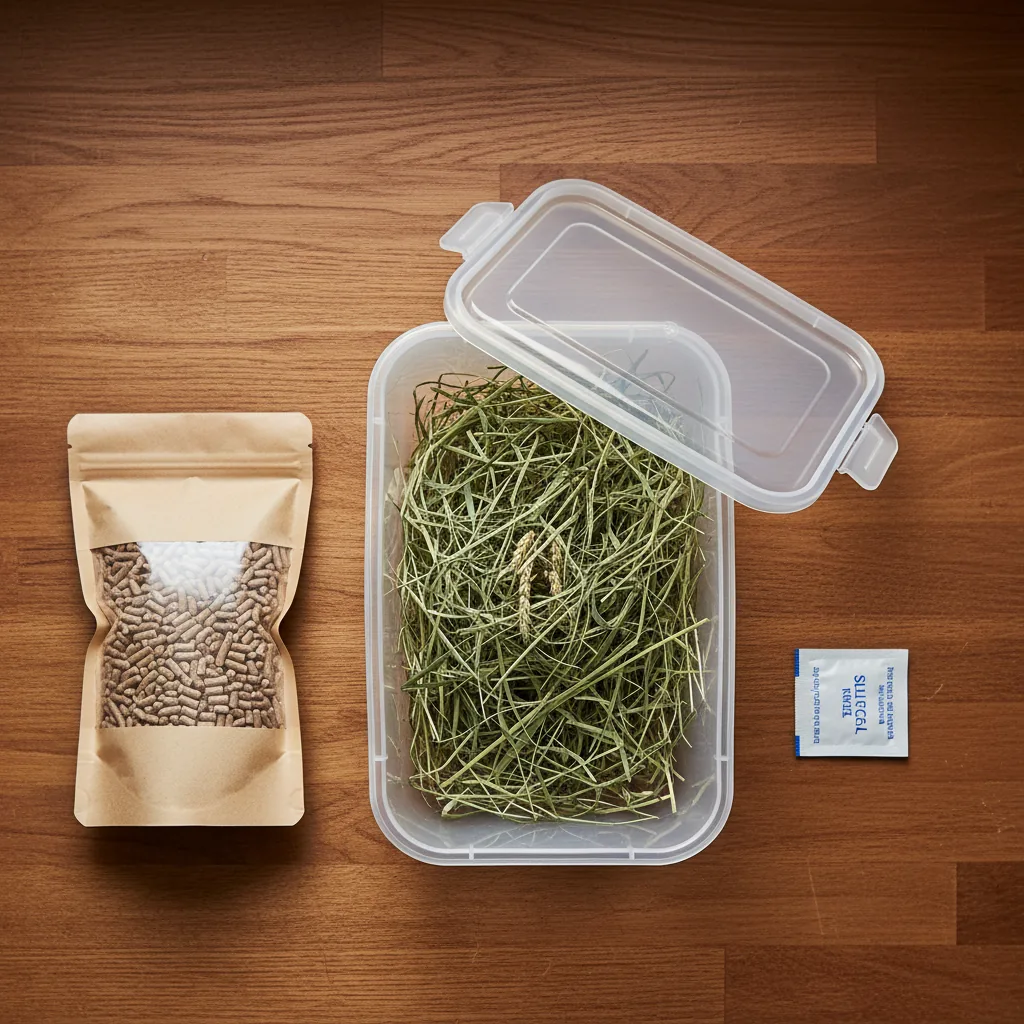
In high-humidity months, hay and pellets themselves absorb moisture and become mould-prone.
- Store hay in airtight containers; refill in two-week portions rather than buying bulk
- Pellets degrade fast post-opening — pick smaller bags, store cool and dark, add a desiccant
- Refresh water once or twice daily to limit bacterial growth
- Even with appetite dipping, do not switch to "tempting" extras — keep the same hay flowing
- Fresh greens are best straight from the fridge for freshness
The strongest driver of normal rabbit gut motility is large quantities of indigestible long-stem fibre (Oglesbee & Lord, 2020). When tsuyu drops appetite, do not compensate with extra pellets or treats — keep hay reachable, and let the gut work.
Signs to watch and when to call a veterinarian
Tsuyu is a season of subtle change, so a daily glance at baselines is worth a lot.
- Appetite: is hay being eaten at the usual pace and volume?
- Droppings: usual size, quantity, no string-of-pearls, output not stopped?
- Water intake: bowl or bottle going down at the usual rate?
- Energy: relaxing in the usual spots, or hunched and still?
- Rear end: dry, clean, no small white grains (eggs)?
For a deeper appetite-loss checklist, see Five things to watch when your rabbit stops eating.
Reach for the phone when:
- No food and no droppings for 12 hours or more (possible GI stasis — HRS / RWAF)
- Sneezing, runny nose, laboured or open-mouth breathing
- Wet or dirty rear end, visible maggots or eggs (suspected flystrike — same-day visit)
- Hunched and motionless, tooth grinding, tense or gassy belly
Practical preparation: identify a rabbit-savvy exotic veterinarian, know an after-hours option, and keep the carrier somewhere you can grab quickly.
A daily log makes tsuyu easier to read
Tsuyu makes "off from normal" hard to spot because everyone — owner and rabbit — feels a little off. If you know your rabbit's typical hay intake, dropping count, and water intake, deviations become visible early.
usagi Diary lets you log meals, droppings, and weight in about 30 seconds. Adding the daily humidity reading gives you a year-over-year picture of how your rabbit handles tsuyu — which makes next year's setup easier.
After tsuyu comes heatstroke season. See also our guide on signs of heatstroke and how to prevent it.
Keep the record in the usagi Diary app
The log you keep is what you show the vet when something changes. Available on iPhone and Android.
Frequently asked questions
What humidity is right for rabbits?
Around 40–60% is the cited range. Above 70%, appetite loss and soft stools become more likely, and Japan's rainy season runs 20–30 points above normal for weeks.
Why does appetite drop during the rainy season?
High humidity is described as a burden on the digestive tract, which can lead to reduced appetite and soft stools. Not eating for 12 hours, or no droppings, is a threshold for seeing a vet.
Dehumidifier or air conditioning?
Both lower humidity, but air conditioning is often easier because it avoids raising the temperature. Judge by humidity measured at cage height.
What is flystrike?
Flies lay eggs in soiled fur around the rear and the maggots attack the skin. It is more likely in humid periods, and a wet, dirty rear is treated as urgent.
How do I prevent mould in the cage?
Clean the toilet area daily and the rest at least weekly, and dry bedding frequently. Keep air moving and never leave damp material in place.
Related articles
References
- 梅雨はうさぎの体調の変化に要注意!うさぎの湿気対策 [Watch for changes in the rainy season: humidity care for rabbits] / anicom Encyclopedia of Living with Rabbits (Anicom Insurance, Japan) (accessed 2026-05-03) Link
- 獣医師のコラム:うさぎの湿度負け [Vet column: humidity stress in rabbits] / What you can do for your rabbit (vet-authored) (accessed 2026-05-03) Link
- Flystrike in Rabbits / PDSA (UK) (accessed 2026-05-03) Link
- Gastrointestinal Diseases of Rabbits (Quesenberry & Carpenter, 4th ed., 2020) / Oglesbee BL, Lord B. In: Ferrets, Rabbits, and Rodents: Clinical Medicine and Surgery, 4th ed. Elsevier (accessed 2026-05-03) Link
- Indoor Housing / Rabbit Welfare Association & Fund (RWAF, UK) (accessed 2026-05-03) Link