The Holland Lop: Traits and What Lop Ears Ask of You
Published
This article is based on literature research by our editorial team and has not been individually reviewed by a veterinarian. References are listed at the end of the article.
Please note: This article is not veterinary treatment. It is a summary of publicly available information from welfare organisations and companies. If your rabbit scratches at its ears, the ears smell, or the head starts to tilt, please contact a rabbit-savvy vet promptly.
What kind of rabbit is a Holland Lop?
The smallest of the lop breeds. The ARBA show standard puts both sexes under 1.81kg.
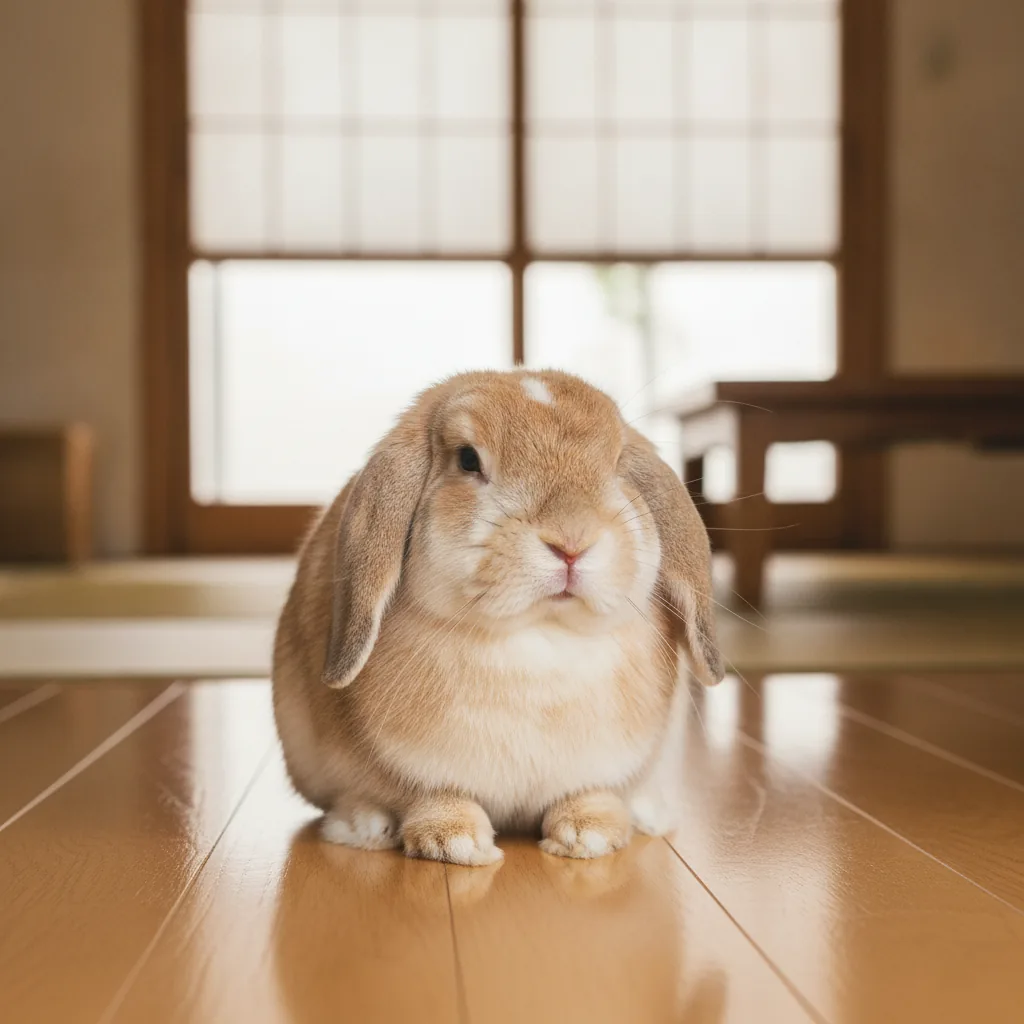
According to a Japanese guide from anicom, the look is a large head with modestly sized drooping ears and a flattened round face, plus a band of raised fur running from the top of the head backwards known as the crown — its position weighs heavily in show judging.
The history is recent. In 1949 a Dutch breeder set out to make a small lop by crossing the Netherland Dwarf with the French Lop. It went badly for a while; English Lop and Angora were brought in, and the target — a rabbit of about 2kg — was eventually reached. The breed arrived in the United States in 1976 and was recognised by ARBA in 1980.
Lifespans once quoted as seven to eight years have lengthened, with Holland Lops over ten years described. In Japan the breed shares the top of the popularity ranking with the Netherland Dwarf.
What are they like?
Friendly, and attached to company. Following their owner around the room is common.
anicom describes them as friendly and endearing, lively and curious, with a lonely streak — and adds that they can be stubborn and opinionated. Because the breed tends to be sociable, differences between males and females may matter less here than in other breeds.
There is one practical note worth carrying forward. Most rabbits dislike being picked up, but ear care and nail trimming are going to happen, so getting your rabbit used to being handled pays off. In a lop breed, whether your rabbit lets you touch its ears is not a small thing.
What does a lop ear do to the ear canal?
It folds, narrows, and stops draining. That is the structural problem underneath the look.
RWAF asks you to imagine folding the cardboard inner of a kitchen roll in half: the hole down the middle closes, and the sections of the tube separate. In a rabbit's ear the same thing happens — the canal narrows, airflow drops, and it becomes difficult for anything to drain out.
More importantly, says the organisation, the separation of the cartilage hoops lets any build-up of wax push between them under the skin. That forms a painful abscess, which bursts and releases material into direct contact with the tissues. If the mass grows around the delicate structures of the head it becomes impossible to remove. RWAF's own survey found that only 27% of such masses were in "up-eared" rabbits.
anicom describes the same thing from the humidity side: because the ears hang, moisture collects and bacteria multiply, making Holland Lops more prone to middle ear infection than up-eared rabbits.
How common is it, really?
In the pedigree survey RWAF reports, 86% had flaky discharge in the ear canal and 42% had narrowing.
According to RWAF, researchers examined 435 pedigree rabbits from 49 breeds. Of those, 86% had flaky discharge in the ear canal, 42% had narrowing of the canal (stenosis), and many showed signs suggesting inflammation or infection. Almost all ear problems were more common in lop-eared rabbits, whose canals are bent and narrow so wax and discharge are trapped — which RWAF links to chronic pain, itching and even hearing loss.
The numbers come with a caveat that makes them worse, not better. RWAF notes the rabbits were volunteered by their breeders and were probably considered healthy, so the real situation in the wider rabbit population could be worse still.
On the strength of this, RWAF argues that lop-eared and brachycephalic breeds should not be bred. That is a statement about rabbits not yet born. For the Holland Lop already asleep in your living room, the practical answer is to look at those ears regularly and to catch changes early.
What should I check at home?
Wax, smell, scratching, and any lump at the base of the ear. Then the head itself.
anicom lists the signs that should prompt an appointment: scratching or pain around the ears, discharge of pus, a sudden increase in wax, and a bad smell from the ear. Left to worsen, it adds, neurological signs such as nystagmus (flickering eyes) and head tilt can follow, sometimes leaving a rabbit needing nursing care, and in some cases proving fatal.
For brachycephalic and lop breeds specifically, RWAF says to watch for masses forming at the base of the ears, overgrown incisors, and head tilt or head shaking from ear infections.
On head tilt, PDSA is detailed. It is usually caused by a problem inside the ear or the brain, and inner ear infection and E. cuniculi are the two most common causes. Always contact your vet if a head tilt develops — immediately if the rabbit is also losing balance, falling over, distressed, or not eating. Most head tilts, PDSA notes, are permanent. That is exactly why noticing early is worth so much.
Should I clean the ears myself?
Looking is the job at home. How to clean, and whether to at all, belongs with your vet.
anicom does advise regular ear care, but what that means in practice depends on the individual rabbit and the state of its ears. A lop canal is folded and narrow, and improvised cleaning at home can do damage. Have a vet look first, including at whether cleaning is needed.
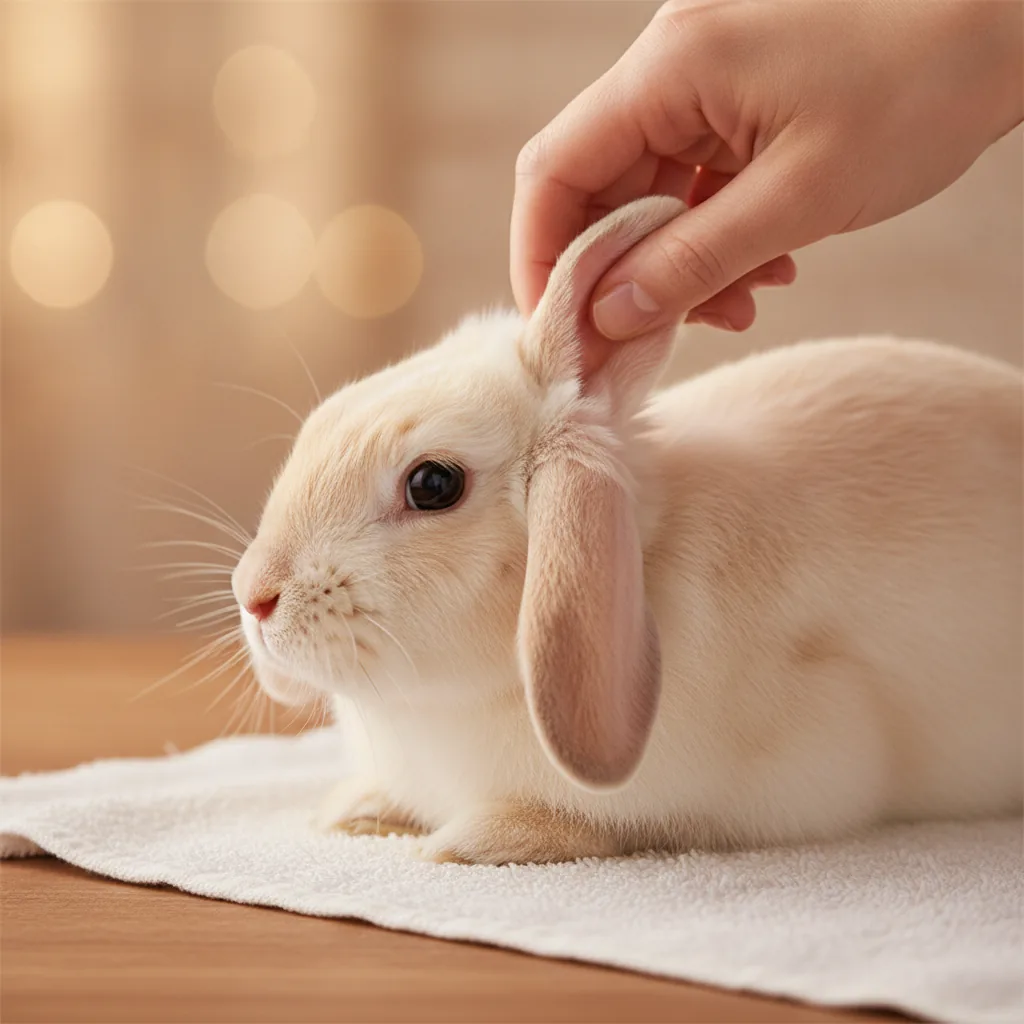
What you can do is clear enough. Lift the ear gently, look at the colour inside, the amount of wax, the smell. Notice whether your rabbit has started objecting to being touched there. Compare with last week. That alone is a serviceable early-warning system.
Which brings back the handling. Getting a rabbit used to being touched is covered in "Before You Bring a Rabbit Home: Checklist and Space".
What else comes with the breed?
Hairballs and dental disease — one from the coat, one from the face.
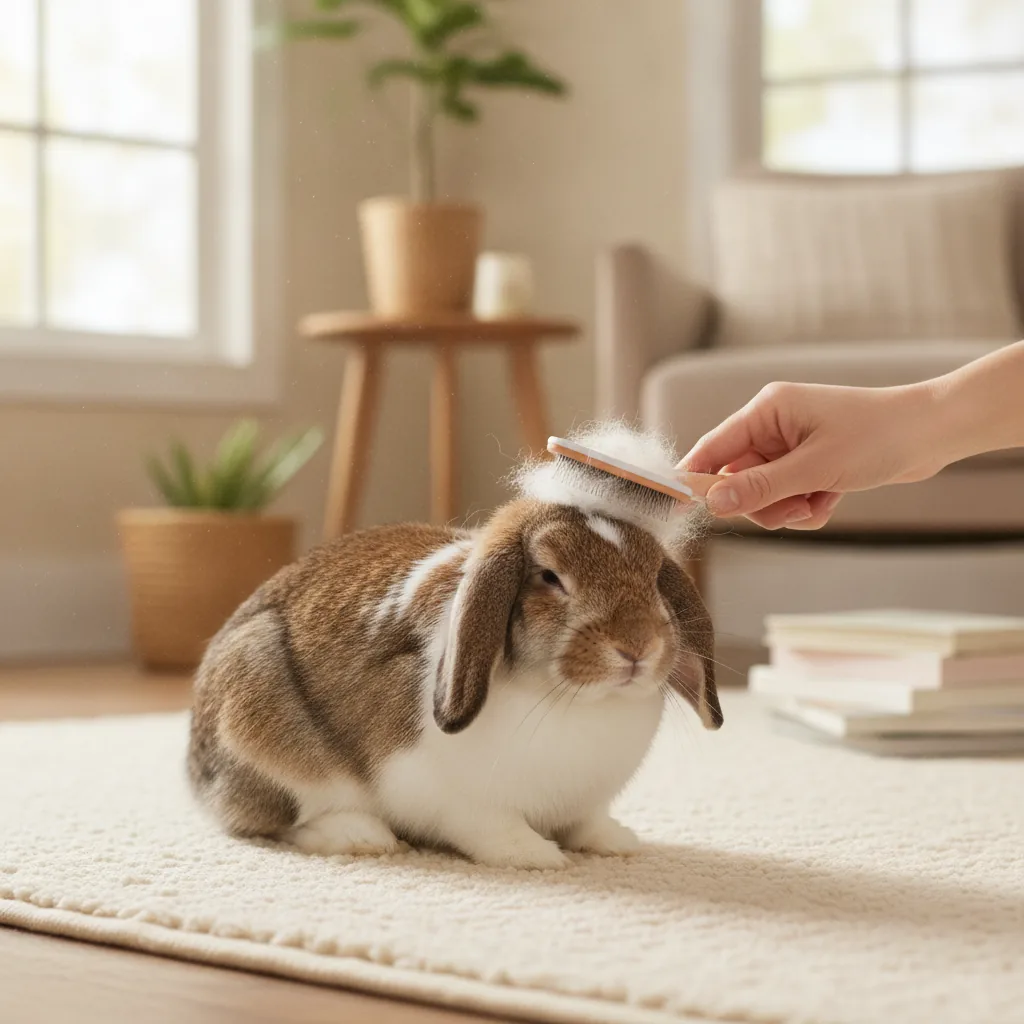
anicom notes that although the coat is short, Holland Lops carry a lot of fur and need regular grooming, with careful brushing through a moult. With a hairball problem the droppings get smaller, come strung together with fur or shaped like teardrops, and eventually stop; appetite goes, and pain shows as a hunched posture or tooth grinding. Once the gut stops moving it is life-threatening and needs urgent veterinary care.
Reading the droppings is covered in "Rabbit Poop Guide: Size, Count and Caecotrophs", and moulting care in "Rabbit Shedding Care: Brushing and the Real GI Stasis Risk".
The same guide covers teeth: with malocclusion the points of the teeth become sharp and painful, and overgrown roots can press on the tear duct until the eye runs. Because RWAF counts lop breeds as brachycephalic too, this part is shared with "The Netherland Dwarf: Traits and Health Points to Watch".
anicom also warns that many Holland Lops have a hearty appetite, so weight is worth watching — see "Rabbit Weight: Weekly Weighing and Reading the Change". The stated comfort range is 18-24°C and 40-60% humidity, kept below 25°C in summer.
A weekly note is how ear changes get caught
You do not look inside the ears every day. But appetite, droppings and weight are visible every day, and both hairballs and ear infections surface there first.
The usagi Diary app logs food, droppings and weight in about thirty seconds. A line like "scratching at the ears this week" means you can tell a vet how long it has been going on. For something like head tilt, where catching it early changes the outcome, that line earns its keep.
Lop ears are what make this breed. You do not have to give them up. Once a week, lift the ear and look. That is the whole of it.
Rabbits differ. When in doubt, a vet's advice comes before your own judgement at home.
Keep the record in the usagi Diary app
The log you keep is what you show the vet when something changes. Available on iPhone and Android.
Frequently asked questions
How big do Holland Lops get, and how long do they live?
They are the smallest of the lop breeds, with an ARBA show standard of under 1.81kg for both sexes. Lifespans once given as seven to eight years have lengthened, and rabbits over ten are described.
What are Holland Lops like?
They are described as friendly, lively and curious, with a soft spot for company — many follow their owner around the room. Stubborn and opinionated at times, too.
Is it true that lop ears mean more ear disease?
RWAF explains that a folded ear narrows the canal so wax cannot drain. In a survey of 435 pedigree rabbits it reports 86% with flaky discharge in the canal and 42% with narrowing, most of it in lop-eared rabbits.
Should I clean the ears at home?
Looking matters more than cleaning. Check the amount of wax, the smell, any itching and any lump at the base of the ear. Whether cleaning is needed at all, and how, is a question for your vet.
What if my rabbit's head is tilted?
PDSA says always contact your vet, and immediately if the rabbit is losing balance, falling over, distressed or not eating. Inner ear infection and E. cuniculi are the two commonest causes, and most head tilts are permanent.
Related articles
References
- RWAF Response to RVC Rabbit Ear Disease Study / Rabbit Welfare Association & Fund (RWAF, UK) (accessed 2026-09-22) Link
- Brachycephaly in Rabbits / Rabbit Welfare Association & Fund (RWAF, UK) (accessed 2026-09-22) Link
- Head tilt in a rabbit / PDSA (People's Dispensary for Sick Animals, UK) (accessed 2026-09-22) Link
- たれ耳がトレードマーク!ホーランドロップの特徴や寿命、性格やなりやすい病気は? [Lop ears as a trademark: the Holland Lop's traits, lifespan, temperament and common illnesses] / anicom Encyclopedia of Living with Rabbits (Anicom Insurance, Japan) (accessed 2026-09-22) Link
- 人気のうさぎの種類は?最新うさぎの人気ランキングをご紹介! [Which rabbit breeds are popular? The latest ranking] / anicom Encyclopedia of Living with Rabbits (Anicom Insurance, Japan) (accessed 2026-09-22) Link