The Netherland Dwarf: Traits and Health Points to Watch
Published
This article is based on literature research by our editorial team and has not been individually reviewed by a veterinarian. References are listed at the end of the article.
Please note: This article is not veterinary treatment. It is a summary of publicly available information from welfare organisations and companies. If you notice a drop in appetite, drooling, watery eyes or weight loss, please contact a rabbit-savvy vet promptly.
What kind of rabbit is a Netherland Dwarf?
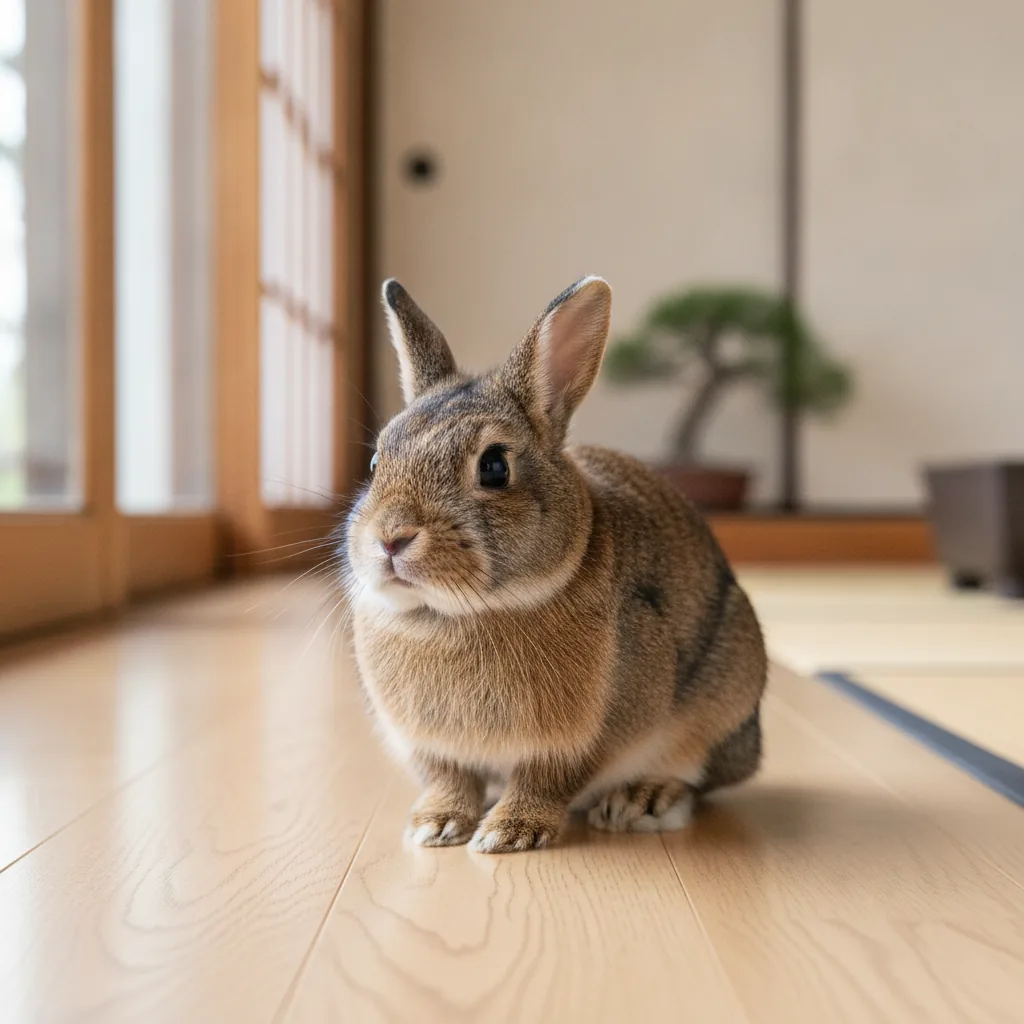
The smallest breed there is. Small, round, and short-eared are the three traits usually given.
According to a Japanese guide from anicom, they weigh around 1kg. The ARBA show standard puts both sexes under 1.13kg with an ideal weight of 906g from six months, though that is a show figure — plenty of pet Netherland Dwarfs reach 1.5-2kg.
As the name says, the breed comes from the Netherlands, traced to crosses between the small Polish breed and small wild rabbits, reaching Britain in 1948 and the United States in the 1960s. Lifespans once quoted as seven to eight years have lengthened; rabbits over ten are described as no longer unusual.
They are also the most popular rabbit in Japan: anicom's breed ranking, drawn from its 2024 household animal white paper, puts the Netherland Dwarf first.
Do they actually bond with people?
They keep a streak of wildness. Slow to trust, different once they do.
anicom describes them as wary and slow to settle, but affectionate — and sometimes demanding — once they have. The same guide advises avoiding too much handling right after the rabbit arrives, and letting the relationship build calmly over time.
They are lively, too, and love a run around the room. Sex-linked tendencies exist, but the guide is clear that "regardless of sex, the right answer is that every rabbit differs". How to spend those first days is covered in "Before You Bring a Rabbit Home: Checklist and Space".
Why are dental problems more likely?
A shorter face and smaller jaw leave less room for the teeth to sit in.
anicom states it plainly: with a round face and a small jaw, the Netherland Dwarf is a breed prone to malocclusion.
The UK's RWAF frames it as conformation. In a brachycephalic breed the nose and mouth are less prominent and more flattened, which changes the shape of the head, and the result includes crowding of the cheek teeth and out-of-alignment incisors. The organisation lists "any mini breed, any dwarf breed, any lop breed" as brachycephalic, and names Netherland Dwarfs directly. What the lop side of that list runs into is covered in "The Holland Lop: Traits and What Lop Ears Ask of You".
Crowded, misaligned teeth do not wear properly and grow too long. RWAF writes that overgrown teeth interfere with eating and grooming and create very painful spurs that cut into the cheeks and tongue.
Is the risk fixed by the breed?
No. RWAF itself writes that diet is "by far" the main cause of dental disease.
Responding in 2024 to a large UK study of dental disease (VetCompass), RWAF put it this way: by far the main cause of dental disease in rabbits is diet, with all other factors having much less of an impact. Not all brachycephalic rabbits develop dental disease, it adds.
The same response does not let the breed off entirely: particular strains of Netherland Dwarfs, and breeds derived from them, are described as having the genetic makeup for an undershot jaw — a Class 3 facial malocclusion in which the front teeth never meet. The tendency is acknowledged; it is the weighting that matters.
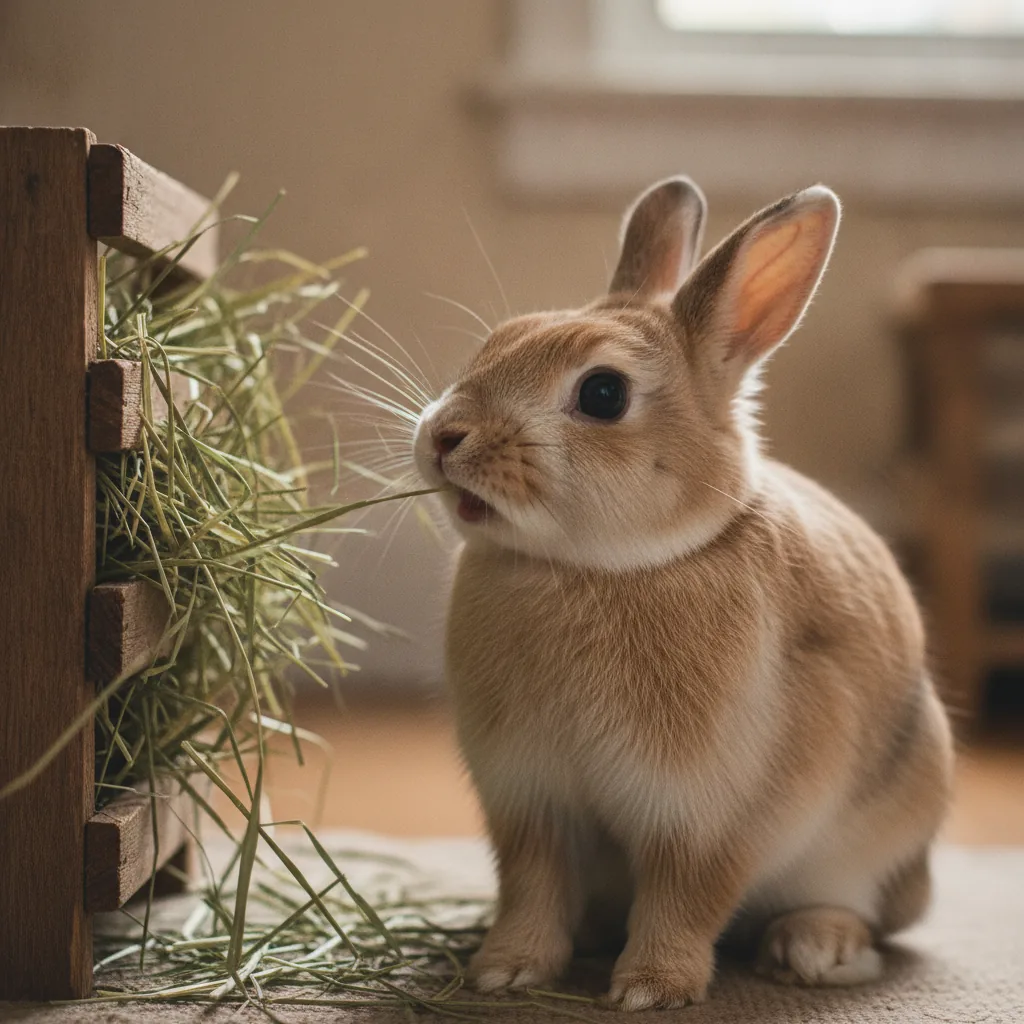
RWAF also explains what makes the diet work: the long fibre in hay has to be chewed side to side, and that is what wears the molars down — no other food does this. The shape of the face cannot be changed; the hay in front of the rabbit can. Choosing it is covered in "Choosing Hay for Rabbits: Cuttings, Grass Types and Alfalfa".
RWAF also notes that nearly half the rabbits in that study had no breed recorded, so the data can neither confirm nor rule out a link with brachycephaly — and that until further research arrives it keeps its precautionary view that brachycephaly is detrimental to rabbit welfare.
What should I watch at home?
Appetite, weight, drooling and tears. You cannot see the mouth, but you can see its effects.
The UK's PDSA notes that rabbits tend to hide pain, so dental disease often goes unnoticed until it is severe, and lists weight loss, weepy eyes and drooling among the symptoms. Its advice is to check the teeth yourself once a week and have a vet examine them a few times a year.
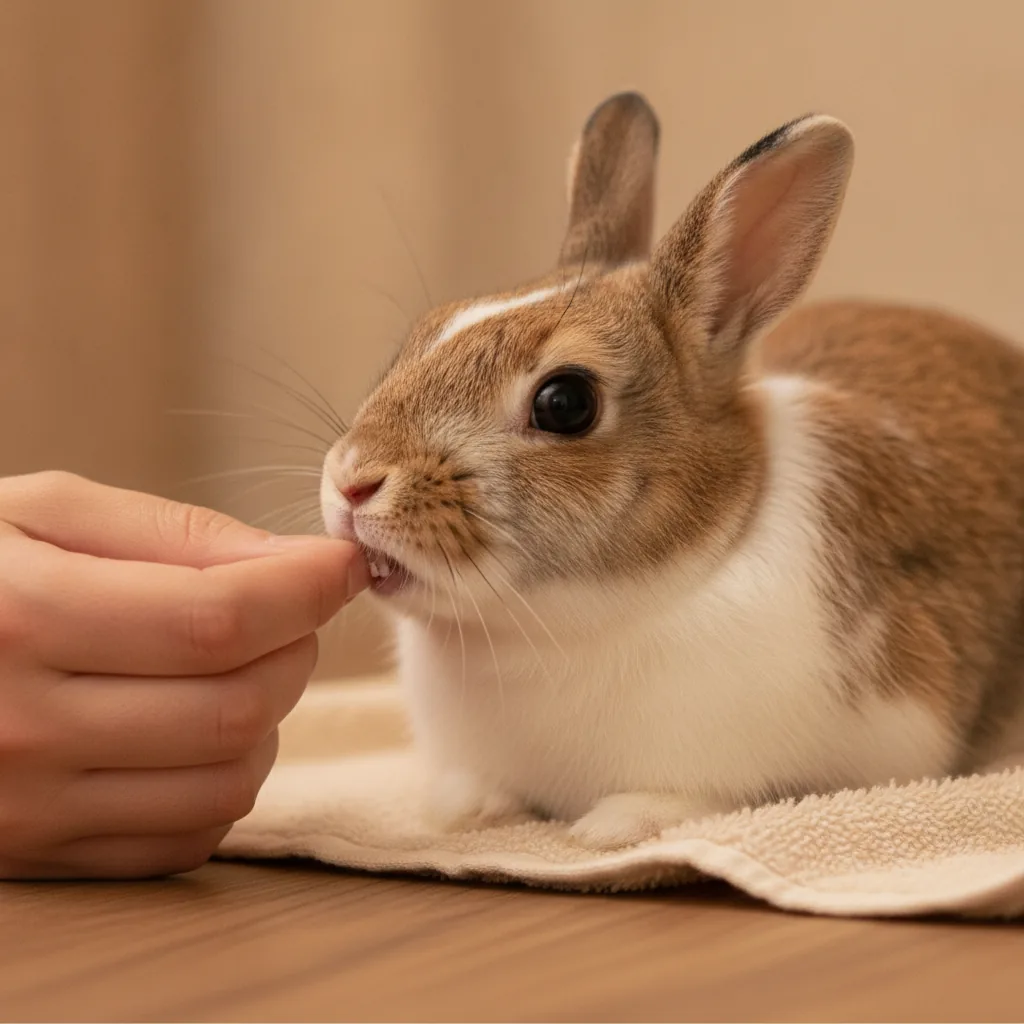
For brachycephalic breeds specifically, RWAF says to watch for masses forming at the base of the ears, overgrown incisors, and head tilt or head shaking from ear infections. Its dental page adds that if a rabbit is not eating properly there is a good chance the teeth are the problem, and that even a well-aligned mouth on a good diet can throw the odd spur — so a loss of appetite is a reason to have all the teeth checked.
Weight is covered in "Rabbit Weight: Weekly Weighing and Reading the Change", appetite in "5 Things to Observe When Your Rabbit Isn't Eating".
What do watery eyes mean?
Tears with nowhere to drain. A narrowed or blocked tear duct pushes them out over the eye instead.
anicom lists the causes of a narrowed or blocked nasolacrimal duct as overgrown tooth roots from malocclusion, inflammation of those roots, bacterial infection, and congenital narrowness — adding that the Netherland Dwarf's round face makes malocclusion more likely and that the duct itself can be narrow from birth. RWAF describes the same mechanism: brachycephaly makes the duct tortuous and convoluted, and more easily blocked.
Left running, the wetness leads to fur loss and skin inflammation around the eye. Because eye disease itself can also cause tearing, this is a reason to see a vet rather than simply keep wiping.
What sort of setup suits them?
18-24°C and 40-60% humidity. Small does not mean sedentary — daily free-roam time is the norm.
anicom advises keeping the room below 25°C even in summer and, on winter nights or while you are out, using blankets or a pet heater while leaving somewhere to escape to if it gets too warm. Temperature is covered in "Rabbit Winter Care: Temperature and Where to Put a Heat Mat".
Despite the size, they are active. Daily free-roam time is needed, and the more running room the better. Clear away carpets and cords they can catch a foot in, and cover anything you would rather not have chewed.
There is a feeding caution too: because the body is small, so is the amount of food it needs — which makes it easy to tip a Netherland Dwarf into obesity with pellets and treats.
Daily notes cover what the breed cannot
Dental trouble shows up first in appetite, weight and droppings, not in the mouth. Those you can see every day.
The usagi Diary app logs food, droppings and weight in about thirty seconds. "The hay is going down more slowly" and "the weight is drifting lower" are not visible on any single day. With a record, you can show a vet when it started.
The round face is what makes this breed. You do not have to give that up. Keep the hay coming, look once a week. What you can do is about that concrete.
Rabbits differ. When in doubt, a vet's advice comes before your own judgement at home.
Keep the record in the usagi Diary app
The log you keep is what you show the vet when something changes. Available on iPhone and Android.
Frequently asked questions
How big do Netherland Dwarfs get, and how long do they live?
They are the smallest breed, at roughly 1kg. The ARBA show standard is under 1.13kg with an ideal of 906g, though plenty of pets reach 1.5-2kg. Ten years and over is no longer unusual.
Do Netherland Dwarfs bond with people?
They are described as wary and slow to settle, but affectionate once they do. Avoid too much handling in the first days and let it happen gradually. Temperament ultimately varies by individual.
Are Netherland Dwarfs prone to dental disease?
A round face and small jaw are described as making malocclusion more likely, and RWAF counts all dwarf breeds as brachycephalic. RWAF also states that diet is by far the main cause of dental disease.
My rabbit's eyes are watering. Is that a problem?
It may be a narrowed or blocked tear duct, which can follow from overgrown tooth roots or be present from birth. Eye disease can also cause it, so it is a reason to see a vet rather than just wipe it away.
Can I prevent dental problems at home?
Keeping hay going in is the main lever. RWAF explains that the long fibre in hay demands a side-to-side chewing action that wears the molars down, and that no other food does the same job.
Related articles
References
- Brachycephaly in Rabbits / Rabbit Welfare Association & Fund (RWAF, UK) (accessed 2026-09-21) Link
- RWAF response to VetCompass dental disease frequency and risk factors May 2024 / Rabbit Welfare Association & Fund (RWAF, UK) (accessed 2026-09-21) Link
- Rabbit Dental Problems / Rabbit Welfare Association & Fund (RWAF, UK) (accessed 2026-09-21) Link
- Dental problems in rabbits / PDSA (People's Dispensary for Sick Animals, UK) (accessed 2026-09-21) Link
- 一番の人気品種!ネザーランドドワーフの特徴や寿命、性格やなりやすい病気は? [The most popular breed: the Netherland Dwarf's traits, lifespan, temperament and common illnesses] / anicom Encyclopedia of Living with Rabbits (Anicom Insurance, Japan) (accessed 2026-09-21) Link
- 人気のうさぎの種類は?最新うさぎの人気ランキングをご紹介! [Which rabbit breeds are popular? The latest ranking] / anicom Encyclopedia of Living with Rabbits (Anicom Insurance, Japan) (accessed 2026-09-21) Link