Rabbit Winter Care: Temperature and Where to Put a Heat Mat
Published
This article is based on literature research by our editorial team and has not been individually reviewed by a veterinarian. References are listed at the end of the article.
Note: This article is not veterinary advice. It is an editorial summary of publicly available information on keeping rabbits through winter. If you notice appetite loss, fewer or smaller droppings, or a rabbit that seems listless, please contact a rabbit-savvy exotic veterinarian promptly.
First, the key point: consistency matters more than the number
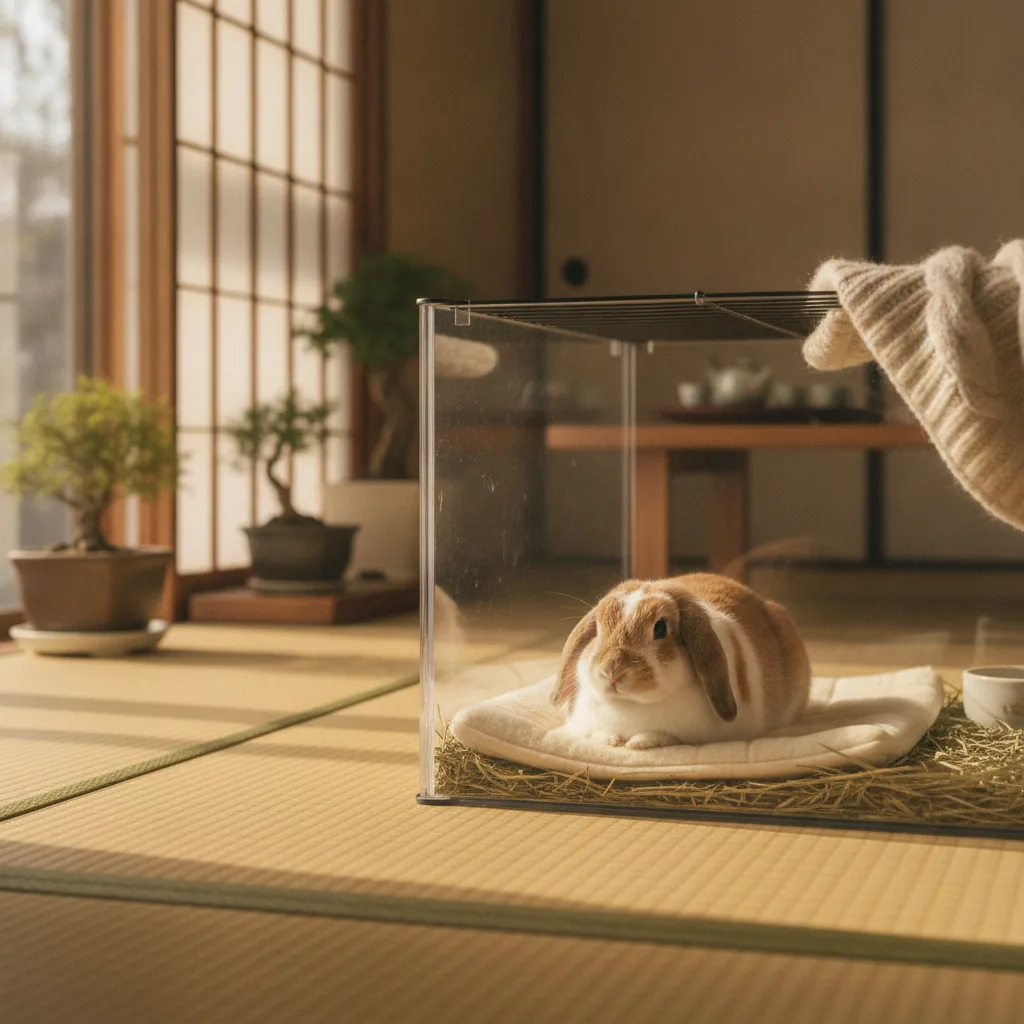
For indoor housing, a commonly cited target is 18–24 °C with humidity of 40–60% (anicom, Japan). That is a sound starting point — but the number alone is not the whole story.
The UK's Rabbit Welfare Association & Fund (RWAF) frames it differently. Wild rabbits live in underground warrens where the temperature sits at around 10 °C and, crucially, stays nearly constant through the year. From this the RWAF draws a clear warning: a shift from cold to hot, or hot to cold, can be extremely harmful for rabbits.
The gap between the Japanese figure (18–24 °C) and the RWAF's 10 °C is not a contradiction — it reflects different housing traditions. In Japan almost all rabbits live indoors; in the UK, outdoor housing remains common. What both share is the principle: avoid sudden change. This article assumes indoor housing. What the outdoor side actually requires is covered in "Outdoor Rabbits in Winter: Shelter, Insulation, Bedding".
Start in October, not in the depths of winter
If you wait until it is properly cold, you will have missed the period that is hardest on rabbits.
Autumn brings the widest gap between daytime and night-time temperatures — exactly the swing the principle above warns against. Japanese guidance therefore recommends beginning cold-weather preparations gradually in autumn rather than switching everything at once in midwinter (anicom).
There is a second reason. In autumn your rabbit is putting significant energy into growing a winter coat, so the moult and the cold arrive together. For what to watch during that period, see Rabbit Shedding Care.
Young rabbits and seniors are more sensitive to temperature swings (anicom). If you live with an older rabbit, start earlier still.
How to tell your rabbit is cold
Your rabbit will tell you, not just the thermometer. Commonly cited signs include:
- Sitting hunched in a corner with the front paws tucked underneath the body
- Ears that feel colder than usual to the touch
A rabbit's ears release body heat, so circulation is reduced in the cold and they cool noticeably. If you handle your rabbit's ears from time to time in daily life, a change will stand out sooner.
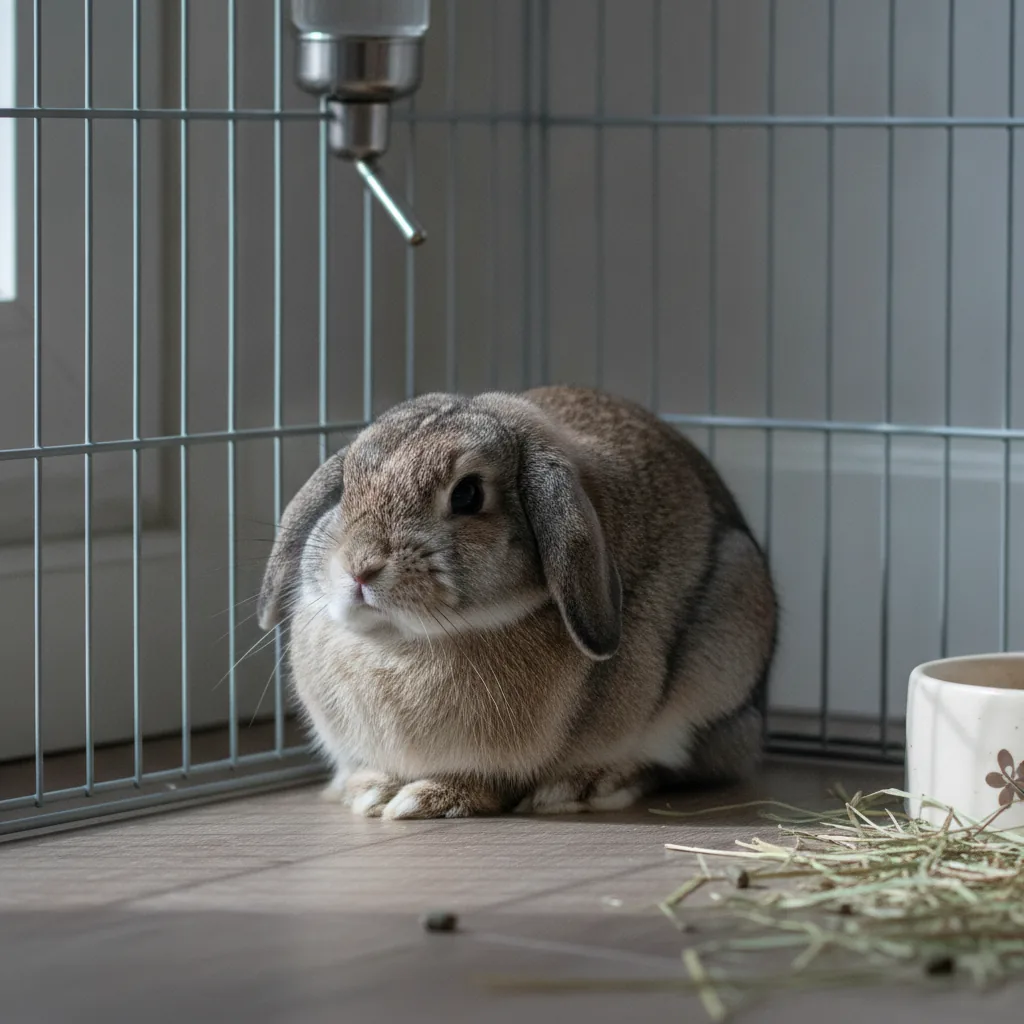
Watch eating and droppings too. In rabbits, cold-related problems often surface first in the digestive tract, and a fading appetite is an early clue. For a structured way to check, see 5 Things to Observe When Your Rabbit Isn't Eating.
Choosing a heat source: the main types
Electric heat mats for the cage floor are the most widely available. Their advantage is that the rabbit can step on or off at will and regulate its own temperature.
Microwaveable heat pads (such as Snugglesafe) have no cable at all, which removes both the chewing hazard and any electrical risk. They do cool down after some hours, so they are not a continuous heat source.
Panels and non-electric insulation — cage covers, insulating mats, deeper bedding — work well alongside the options above.
Where an electric product is used, guidance recommends choosing a rabbit-specific model with thoroughly protected cabling (anicom). Three criteria help: it must not get too hot, the cable must be protected, and it should be easy to clean.
Placement decides almost everything
The same heat mat can be helpful or hazardous depending on how it is positioned. This is the step most often overlooked.
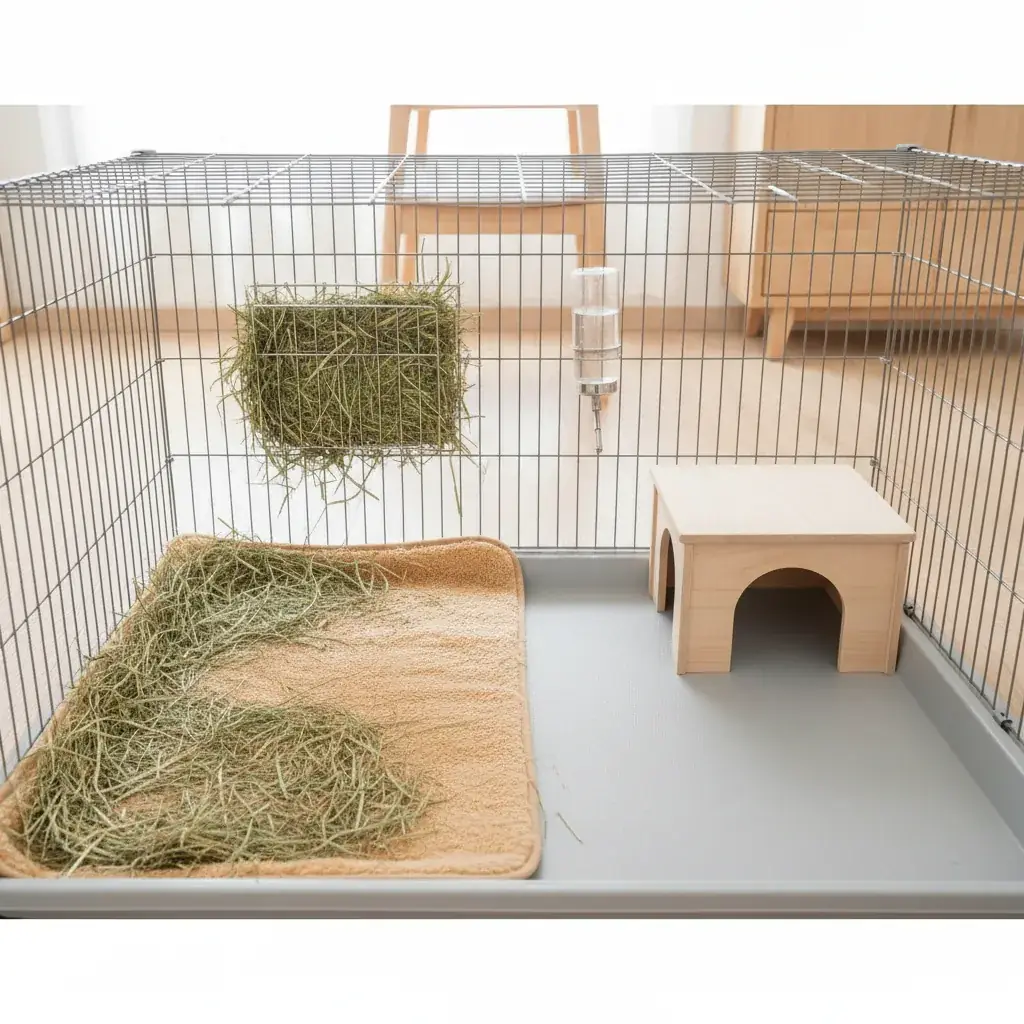
Never cover the whole floor area. There must always be a warm area and a cooler one, so your rabbit can choose.
For outdoor housing the RWAF describes offering two sleeping areas and heating only one of them. The reasoning is instructive: if the sleeping area becomes too warm the rabbit will leave it — and may then get too cold outside it. The same logic applies indoors: the real risk is having nowhere to retreat to.
Also worth checking:
- Avoid contact burns. A cloth over the mat keeps heat from acting directly on the skin for hours at a time
- Cable protection is essential. Use cable covers, or route the lead outside the cage so it cannot be reached
- Never leave heaters running unattended. Japanese guidance warns explicitly against leaving stoves or flame-based heaters on while you are out (anicom)
Three things that work without any heater
Before adding heat, it pays to close off where the cold gets in.
Draughts. The UK's PDSA notes that draughts from windows and doors can chill rabbits, and advises moving them out of the way. Spots by windows and in doorways deserve a second look.
Cold from below. A cage placed straight onto tile or laminate loses heat through the floor. A single insulating mat underneath makes a noticeable difference, and a cover at night reduces heat loss.
Air during heating season. Less widely known but relevant: the PDSA warns that non-stick pans, wood-burning stoves and scented candles give off fumes that can harm pets, and advises keeping rabbits away from them. In winter, when rooms are ventilated less, this matters more.
Dryness is the other side of the coin. The cited target is 40–60% humidity (anicom). Do not assume, though, that more dandruff means dry air: PDSA lists dandruff among the symptoms caused by mites, lice and fleas. Winter humidity is covered in depth in Rabbits and Dry Winter Air: Humidity and Reading Dandruff.
Recording your way through winter
Temperature and humidity can only be managed once they are measured — and where you measure matters. What feels comfortable at standing height says little about the cage floor. Put the thermo-hygrometer at cage height.
Winter is also when appetite, droppings and weight shift most easily. Knowing the normal baseline is what lets you notice smaller droppings or untouched pellets early.
usagi Diary records meals, droppings and weight in about 30 seconds. Log temperature and humidity alongside them and, over a few years, you will see exactly when your home starts to get cold — which makes the next winter far easier to prepare for.
After winter comes the warm season. See also Rabbit Heatstroke: Signs and Prevention. If something about your rabbit's behaviour worries you, do not wait it out — contact your veterinary practice.
Keep the record in the usagi Diary app
The log you keep is what you show the vet when something changes. Available on iPhone and Android.
Frequently asked questions
Does my rabbit's cage really need a heater?
If the room stays between 18 and 24 °C, a heater is not always necessary. In rooms that cool sharply at night, or with young or senior rabbits, a partially heated area is reassuring.
When should I start preparing for the cold?
Guidance suggests starting gradually in autumn rather than waiting for midwinter, because autumn brings the widest day-to-night temperature swings and sudden change is what burdens rabbits most.
Can I cover the whole cage floor with a heat mat?
Covering the entire floor is best avoided. Provide both a warm area and a cooler one so your rabbit can move between them. With nowhere cooler to go, the rabbit loses its escape route.
How can I tell whether my rabbit feels cold?
Reported signs include sitting hunched in a corner with the paws tucked under the body, and ears that feel colder than usual. Check eating and droppings alongside these signs.
What humidity should I aim for in winter?
Around 40 to 60% is the cited target. Heating dries the air in winter. If dandruff increases, though, do not put it down to dry air: treat it as a skin problem and contact your vet.
Related articles
References
- Keeping Outdoor Rabbits Warm in Winter / Rabbit Welfare Association & Fund (RWAF, UK) (accessed 2026-09-13) Link
- Keeping rabbits warm in winter / PDSA (People's Dispensary for Sick Animals, UK) (accessed 2026-09-13) Link
- Winter care advice for rabbits / RSPCA (UK) (accessed 2026-09-13) Link
- 寒さ対策は大丈夫?うさぎが寒がらないようにするにはどうしたらいい? [Is your cold-weather care enough? How to keep a rabbit from getting cold] / anicom Encyclopedia of Living with Rabbits (Anicom Insurance, Japan) (accessed 2026-09-13) Link