Rabbits and Dry Winter Air: Humidity and Reading Dandruff
Published
This article is based on literature research by our editorial team and has not been individually reviewed by a veterinarian. References are listed at the end of the article.
Please note: This article is not veterinary advice. It is reference information compiled by our editorial team from published books and organisations. If you notice dandruff, fur loss, scratching or any other change that concerns you, please see a vet experienced with rabbits promptly.
What should I watch about humidity in winter?
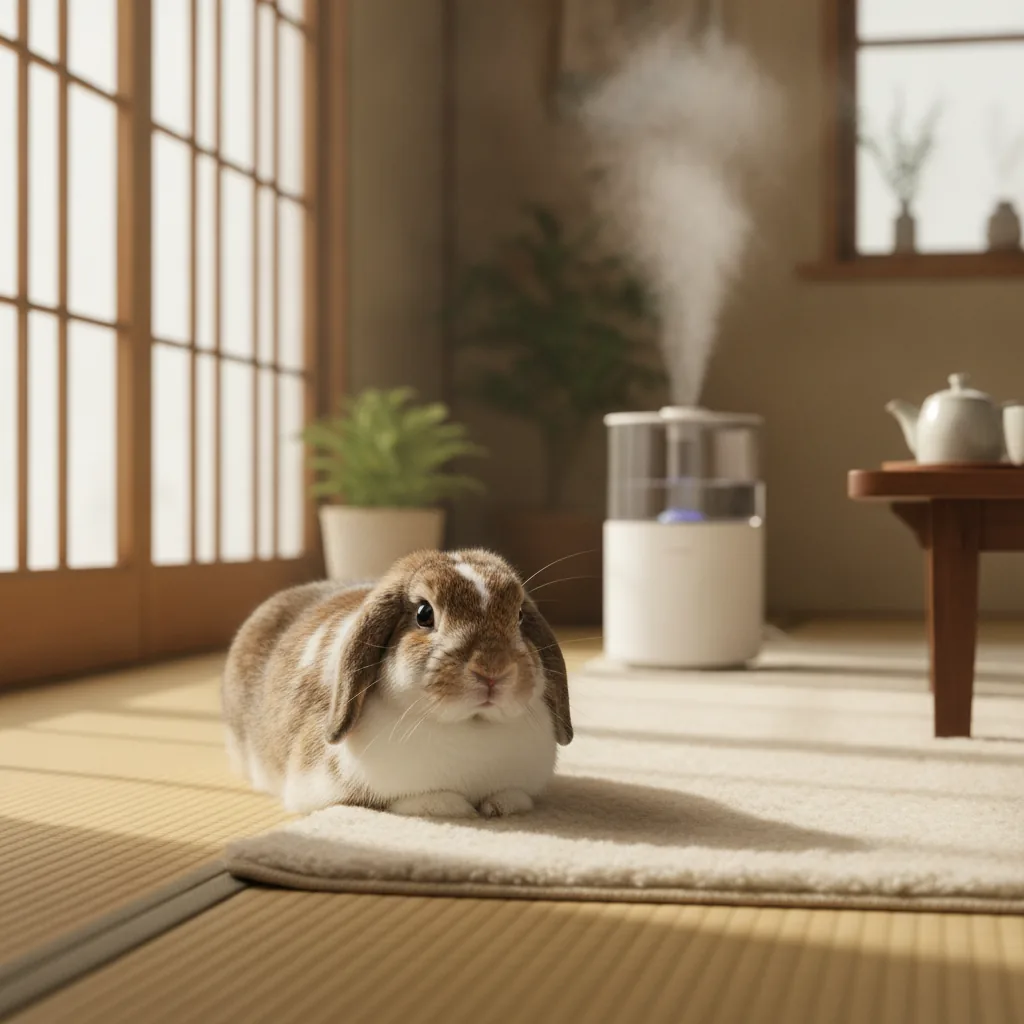
Keep relative humidity between 40 and 60%. But if dandruff appears, treat it as a skin question rather than a dry-air one.
The Japanese anicom encyclopedia of living with rabbits gives 18 to 24°C and 40 to 60% humidity as the usual guide. Winter is the season when the lower end slips.
The explanation that "winter is dry, so dandruff appears" deserves a closer look, though. As covered below, the animal welfare sources reviewed here connect dandruff with parasites instead.
For the temperature side of the same season, see Rabbit Winter Care: Temperature and Where to Put a Heat Mat. This article is about humidity, especially when it falls too low.
Why does indoor air get dry in winter?
Heating raises air temperature, and the same amount of water vapour then reads as a lower relative humidity. You cannot judge it without measuring.
The percentage on a hygrometer is relative humidity. Warm the same air and the number falls. Outdoor air is drier in winter to begin with, and heating the room pushes the reading down further than it feels.
Rabbits live near the floor. A hygrometer at human eye level does not describe the air where your rabbit actually is. Place it at enclosure height.
On heating itself, anicom advises never leaving stoves or paraffin fan heaters with an open flame switched on while you are out, citing poor ventilation, a room that becomes too hot, and the risk of fire.
What happens to a rabbit when humidity drops?
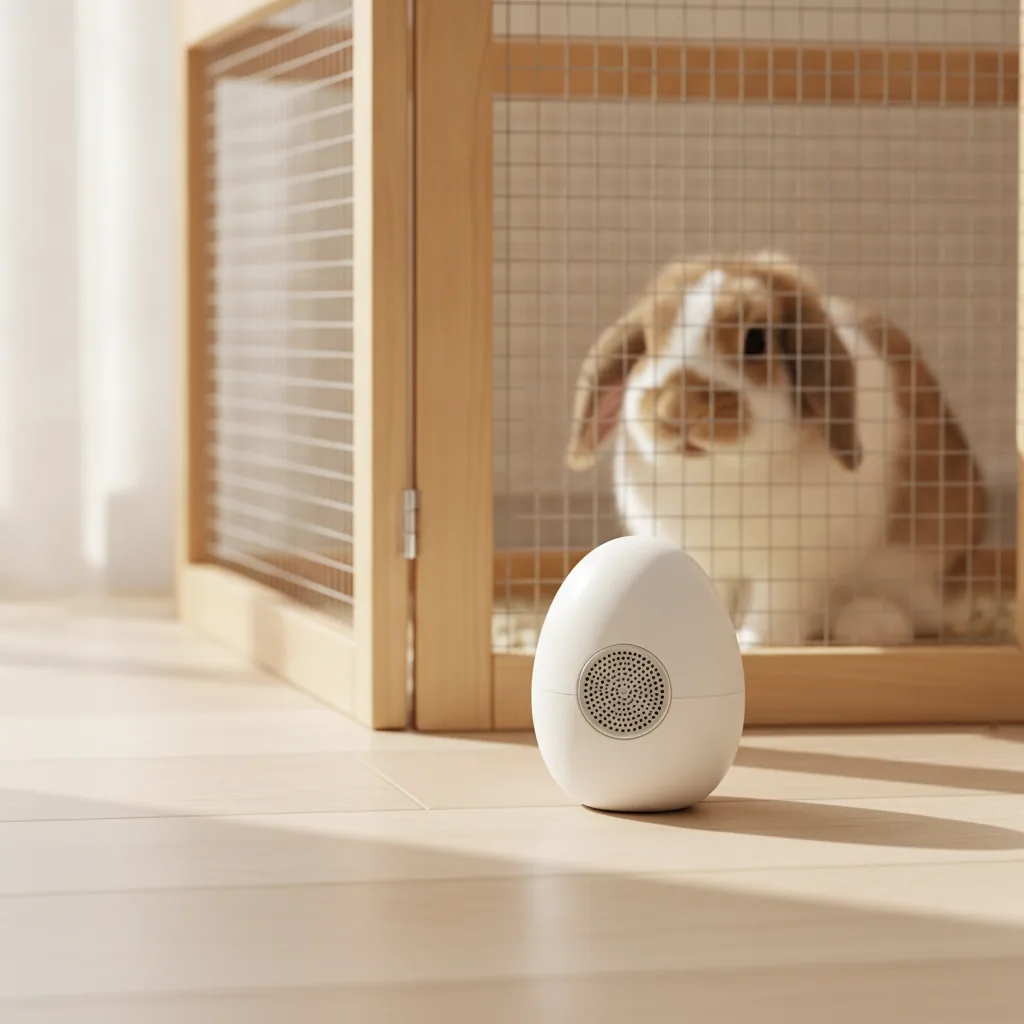
In the sources reviewed here, no figure was given for the effect of low humidity itself. Fluid inside the body is a separate question.
Nothing in the welfare organisations' published material supported a firm statement that dry air causes a specific problem. It seems more honest to say so plainly.
What is clear concerns water inside the rabbit. RWAF explains that swallowing fur during grooming is normal in itself, and that trouble arises when the hair dries out because the gut has slowed, because of dehydration, or both.
So the thing to watch in winter is less the humidity of the air than whether your rabbit is drinking and eating. Food and fluid during a moult are covered in Autumn Moulting in Rabbits: Diet, Weight and Warning Signs.
Is winter dandruff caused by dry air?
Do not assume it is. PDSA lists dandruff among parasite symptoms, and notes these mites can pass to people.
PDSA explains that mites, lice and fleas are all tiny parasites causing symptoms such as itching, rashes, alopecia, dandruff, scabs and crusts.
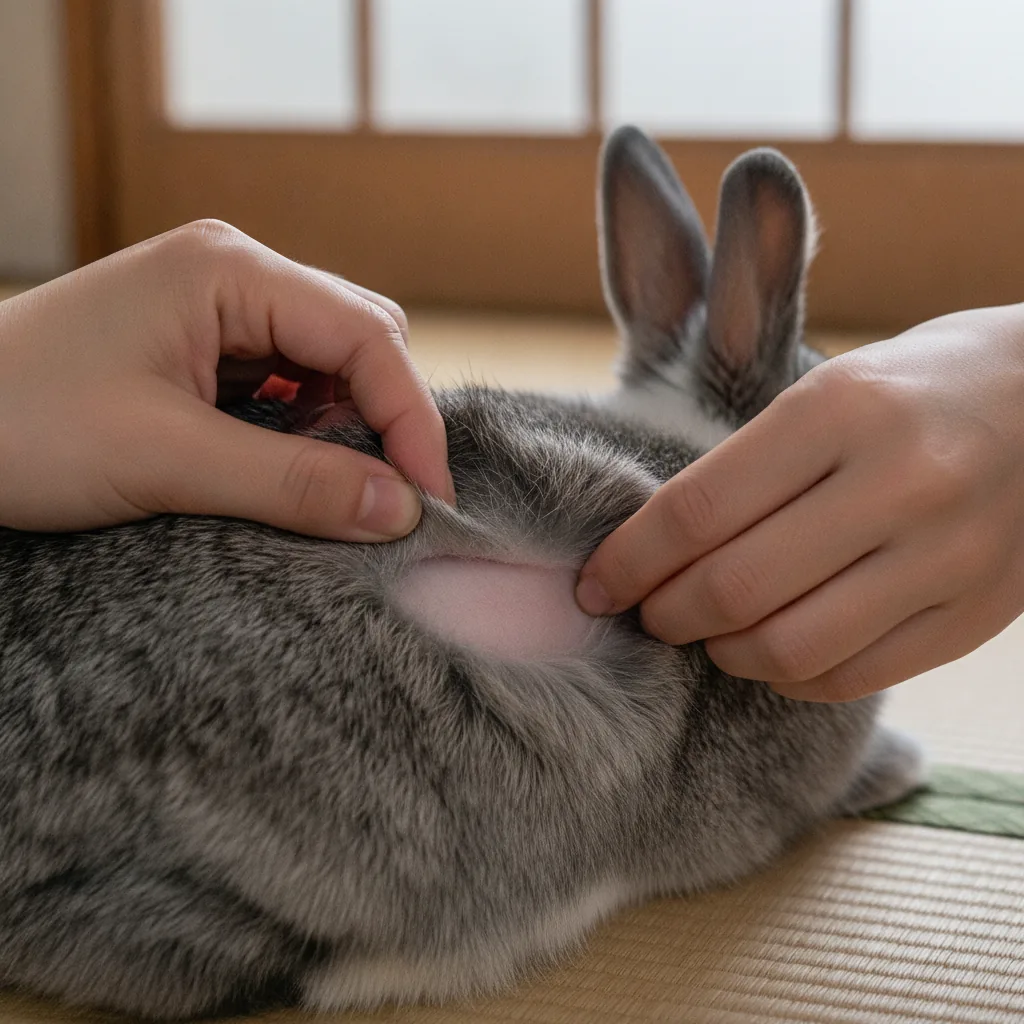
One of them, the cheyletiella mite, is known as "walking dandruff". PDSA describes it as causing crusty, scaly skin and sometimes fur loss, and explains the name comes from being able to see the mites crawling on the skin and fur when you look closely.
The House Rabbit Society likewise calls patchy fur loss with mild to severe flaking along the rabbit's back the hallmark of Cheyletiella parasitovorax, the most common rabbit skin mite.
PDSA adds that Cheyletiella mites can also pass to humans, and to speak to your doctor if you think you have caught them from your rabbit. Filing winter dandruff under "it is just the dry season" risks missing something that needs treating.
Rather than trying to tell moult from mite yourself, look at the skin. For moulting itself, see Rabbit Shedding Care: Brushing and the Real GI Stasis Risk.
How far should I go with humidifying?
Not too far. Above 60% the risks are the same as in a rainy season: condensation and mould.
The 40 to 60% guide has an upper bound as well. Raising the number with a humidifier is easy enough, but overshoot and condensation forms indoors, which invites mould. Cold windows and walls make condensation more likely in winter anyway.
What high humidity tends to bring is covered in Rabbit Rainy Season Care: Humidity, Mould, and Appetite Loss. Over-humidifying in winter moves you towards the same problems.
If you do use a humidifier, position it so the mist does not blow directly onto the enclosure, and keep the tank and tray clean. Standing water left damp becomes a source of mould in its own right.
When should I contact a vet?
When the coat stops being smooth. PDSA advises seeing a vet promptly once you notice a skin problem.
PDSA writes that a rabbit's fur should be smooth, thick and silky, and that if it is not, or you notice symptoms of a skin problem, you should contact your vet for advice. It adds that skin problems often cause a lot of discomfort, so it is always best to have a rabbit seen as soon as possible.
In its overview of skin problems, PDSA likewise advises contacting a vet on noticing any sign of a skin problem, noting that skin conditions are often very painful. Waiting to see whether things improve is not recommended.
The House Rabbit Society suggests that if the hair is thin beyond the usual pattern, it is a good idea to have a vet examine your rabbit.
Identifying the cause and deciding on treatment belong to the consultation itself, so this article stops here.
Daily records make winter changes easier to see
Logging humidity alongside appetite, droppings and coat condition helps separate the season from an actual change in health.
Winter is easy to explain away, which is exactly what makes changes easy to miss. The usagi Diary app records food, droppings and weight in around thirty seconds, so at a consultation you can show when things started to look different instead of trying to recall it.
Individuals vary. When in doubt, prioritise asking your vet.
Keep the record in the usagi Diary app
The log you keep is what you show the vet when something changes. Available on iPhone and Android.
Frequently asked questions
What humidity should a rabbit's room be?
The Japanese anicom encyclopedia gives 18-24°C and 40-60% relative humidity as a guide. Put the hygrometer at enclosure height rather than eye level so the reading reflects where your rabbit actually lives.
Does my rabbit need a humidifier?
Measure first and decide based on whether you are below 40%. Pushing humidity too high brings condensation and mould, so staying under 60% is the safer target.
My rabbit has more dandruff this winter. Is it the dry air?
Do not assume so. PDSA lists dandruff among the symptoms caused by mites, lice and fleas, and notes that Cheyletiella mites can pass to humans. Contact your vet rather than waiting.
Can I leave the heating on while I am out?
anicom advises never leaving stoves or paraffin fan heaters with an open flame running unattended, citing poor ventilation, overheating of the room and fire risk.
Do rabbits drink less in winter?
It varies by individual, but changes in drinking and eating can be signs in themselves. RWAF explains that dehydration or a sluggish gut lets swallowed fur dry out and linger.
Related articles
References
- Fleas, mites and lice in rabbits / PDSA (People's Dispensary for Sick Animals, UK) (accessed 2026-09-14) Link
- Skin problems in rabbits: an overview / PDSA (People's Dispensary for Sick Animals, UK) (accessed 2026-09-14) Link
- Skin Diseases in Rabbits: Common Causes, Common Treatments / House Rabbit Society (US) (accessed 2026-09-14) Link
- Moulting / Rabbit Welfare Association & Fund (RWAF, UK) (accessed 2026-09-14) Link
- 寒さ対策は大丈夫?うさぎが寒がらないようにするにはどうしたらいい? [Is your cold-weather care enough? How to keep a rabbit from getting cold] / anicom Encyclopedia of Living with Rabbits (Anicom Insurance, Japan) (accessed 2026-09-14) Link