Rabbits in Autumn: Why Temperature Swings Are the Real Risk
Published
This article is based on literature research by our editorial team and has not been individually reviewed by a veterinarian. References are listed at the end of the article.
Note: This article is not veterinary advice. It summarises publicly available information on seasonal rabbit care. If you notice appetite loss, fewer or smaller droppings, or lethargy, please contact a rabbit-savvy exotic veterinarian promptly.
Are rabbits really more vulnerable in autumn?
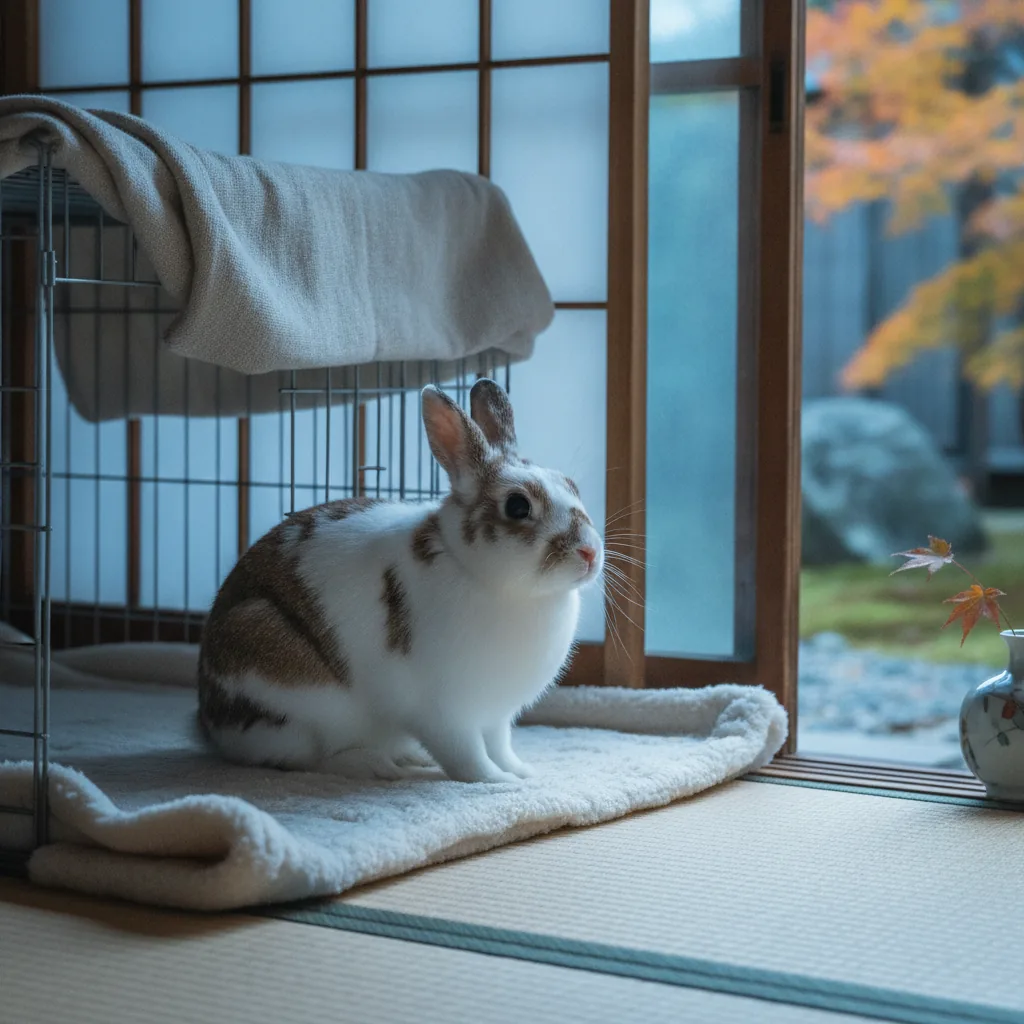
Yes. A rabbit-specialist practice in Japan reports that notably more rabbits are presented for illness in spring and autumn — with the gap between daytime and night-time temperature given as the cause.
Their assessment of winter is the surprising part:
Winter is a surprisingly comfortable season; many rabbits tolerate considerable cold well. As long as you watch for draughts, very few come in with problems
In other words, it is not cold that burdens them, but change. A steadily cold January is easier than an October running 25°C by day and 12°C at night.
Why do temperature swings cause problems?
The body cannot keep pace with rapid change, and it shows first in appetite. Older rabbits are affected most.
The column describes it this way:
It was cold, then suddenly warm — or the reverse. Pleasant during the day, then the temperature drops sharply at night. Older rabbits in particular cannot keep up with changes that abrupt
Autumn adds a second load: the moult costs significant energy as the winter coat grows in. Exertion and temperature swings arrive together. See also Rabbit Shedding Care.
What room temperature should I aim for?
For indoor housing, 18–24°C at 40–60% humidity is the cited comfortable range (anicom). In autumn, the additional priority is keeping the swing within a single day small.
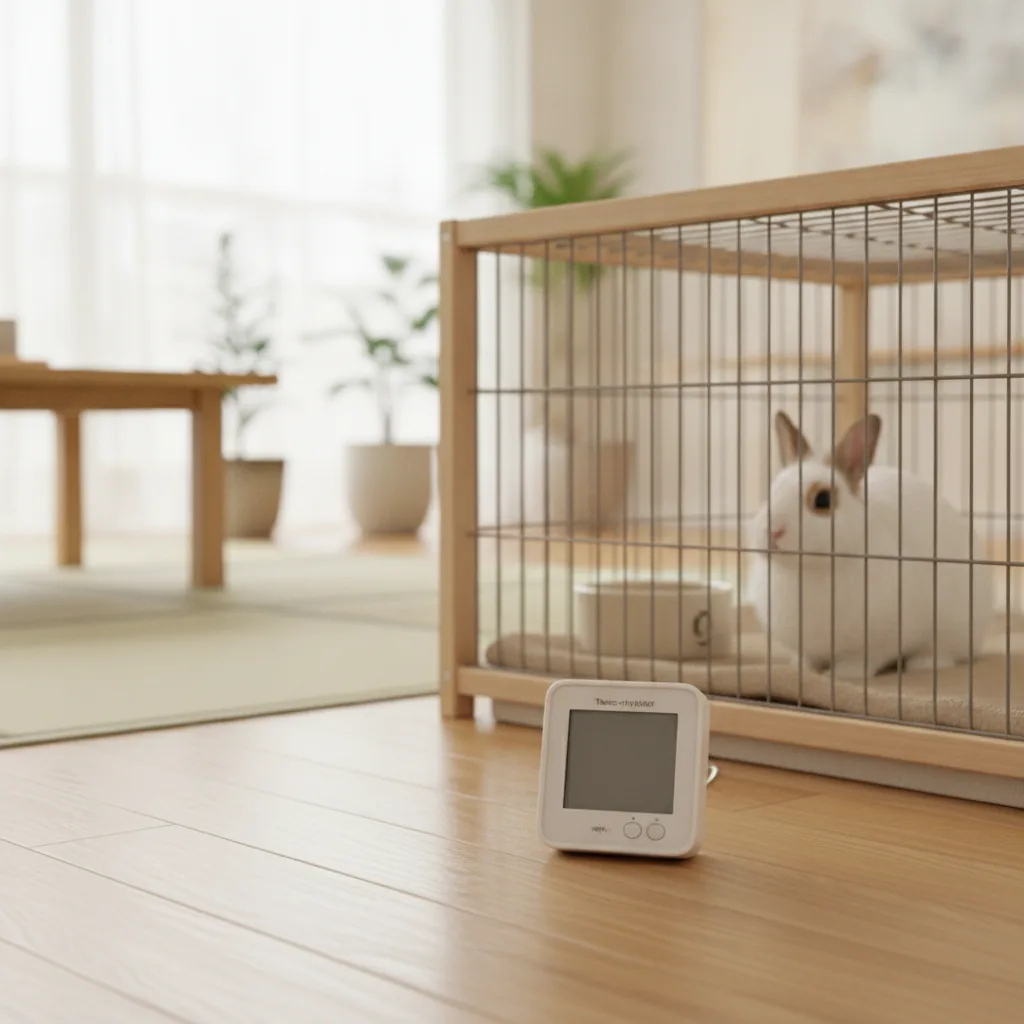
This matches the RWAF, which describes consistency as the critical property of a natural warren. It is not the absolute figure that counts, but how steady it stays.
Mind the measuring height: what feels fine where you stand says nothing about the cage floor.
How do I handle the cold nights?
In rooms that only cool overnight, timed heating keeps the early-morning low from crashing.
Three measures work reliably:
- Heating on a timer, so there is no overnight trough
- A cage cover to slow heat loss (keep airflow)
- Distance from windows and doors — draughts chill rabbits
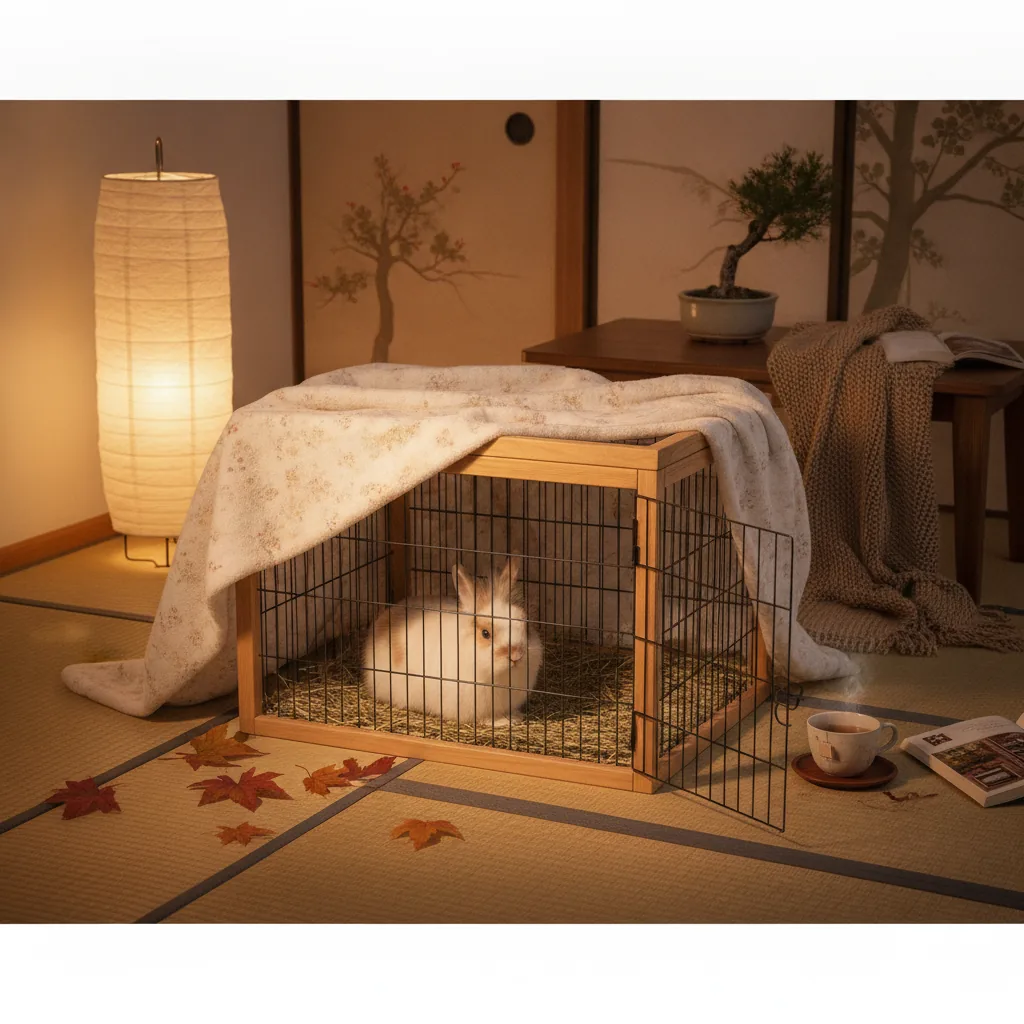
Too warm is also a problem. The same practice sees rabbits fall ill from overheated rooms. For the practical setup, see Rabbit Winter Care.
My rabbit is eating less — can I wait and see?
No. The practice warns explicitly against putting reduced appetite down to the changing season.
The reason is a cycle in the gut:
With appetite gone, the gut slows; food residue and droppings begin to ferment and gas builds up. The gas causes pain, appetite falls further, the gut slows more — and the cycle reinforces itself
There is a second reason: even when the temperature swing looks like a plausible explanation, another illness may be present. That is precisely the risk in saying "it is just the season".
For a structured check, see 5 Things to Observe When Your Rabbit Isn't Eating; for body language, see Is My Rabbit Cold?.
Which rabbits are most at risk?
Seniors and young rabbits. Both regulate body temperature less well and are more sensitive to swings (anicom).
If you live with one, bring your autumn measures forward — not once it turns cold, but in September and October as the nights start to cool.
The same applies to rabbits with existing conditions or a history of appetite loss. Those episodes often recur at the same time of year.
Records make next autumn easier
Temperature swings arrive at the same time every year. Knowing when things went wrong last year lets you get ahead of it this time.
usagi Diary records meals, droppings and weight in about 30 seconds. Log the room temperature alongside them and, over a few years, patterns emerge: when the nights in your home start to cool, and when your rabbit responds to it.
After autumn comes winter. If something seems off, do not wait it out — contact your veterinary practice.
Keep the record in the usagi Diary app
The log you keep is what you show the vet when something changes. Available on iPhone and Android.
Frequently asked questions
Are rabbits more vulnerable in autumn?
A rabbit-specialist practice reports notably more rabbits presented for illness in spring and autumn. The cause given is the sharp gap between daytime and night-time temperatures, which older rabbits handle poorly.
What room temperature should I aim for in autumn?
For indoor housing, 18–24°C is the cited comfortable range. What matters additionally in autumn is keeping the swing within a single day small, so the temperature does not crash overnight.
My rabbit is eating less this autumn. Can I wait and see?
No. The practice warns explicitly against blaming the season. Once appetite drops, the gut slows, gas builds up, and a self-reinforcing cycle begins.
Is autumn really riskier than winter?
According to the vet column, yes. Rabbits cope well with steady cold as long as there are no draughts. It is the change, not the cold, that causes problems.
Can I start heating in autumn?
Yes, particularly to prevent overnight lows. But avoid overheating — the same practice also sees rabbits fall ill because rooms were kept too warm.
Related articles
References
- 獣医師のコラム 寒暖差にご用心 [Vet column: beware of temperature swings] / Column by a rabbit-specialist veterinary practice (Ales Animal Medical Center, Japan) (accessed 2026-09-13) Link
- 寒さ対策は大丈夫?うさぎが寒がらないようにするにはどうしたらいい? [Is your cold-weather care enough? How to keep a rabbit from getting cold] / anicom Encyclopedia of Living with Rabbits (Anicom Insurance, Japan) (accessed 2026-09-13) Link
- Keeping Outdoor Rabbits Warm in Winter / Rabbit Welfare Association & Fund (RWAF, UK) (accessed 2026-09-13) Link
- Understanding rabbit body language / PDSA (People's Dispensary for Sick Animals, UK) (accessed 2026-09-13) Link