Rabbit Poop Guide: Size, Count and Caecotrophs
Published
This article is based on literature research by our editorial team and has not been individually reviewed by a veterinarian. References are listed at the end of the article.
Please note: This article is not veterinary treatment. It is a summary of publicly available information from welfare organisations and veterinary practices. If you notice changes in the number or size of droppings, a drop in appetite, or anything else that worries you, please contact a rabbit-savvy vet promptly.
What do healthy rabbit droppings look like?
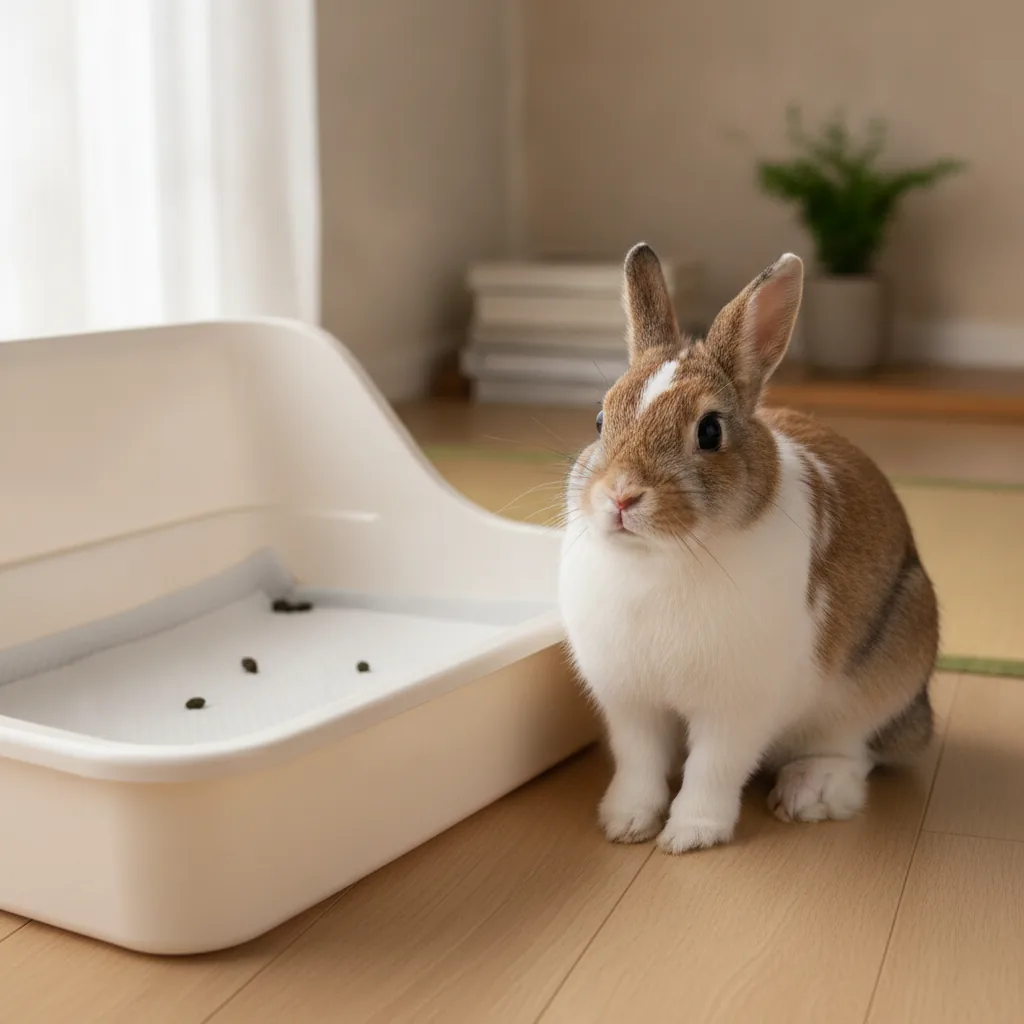
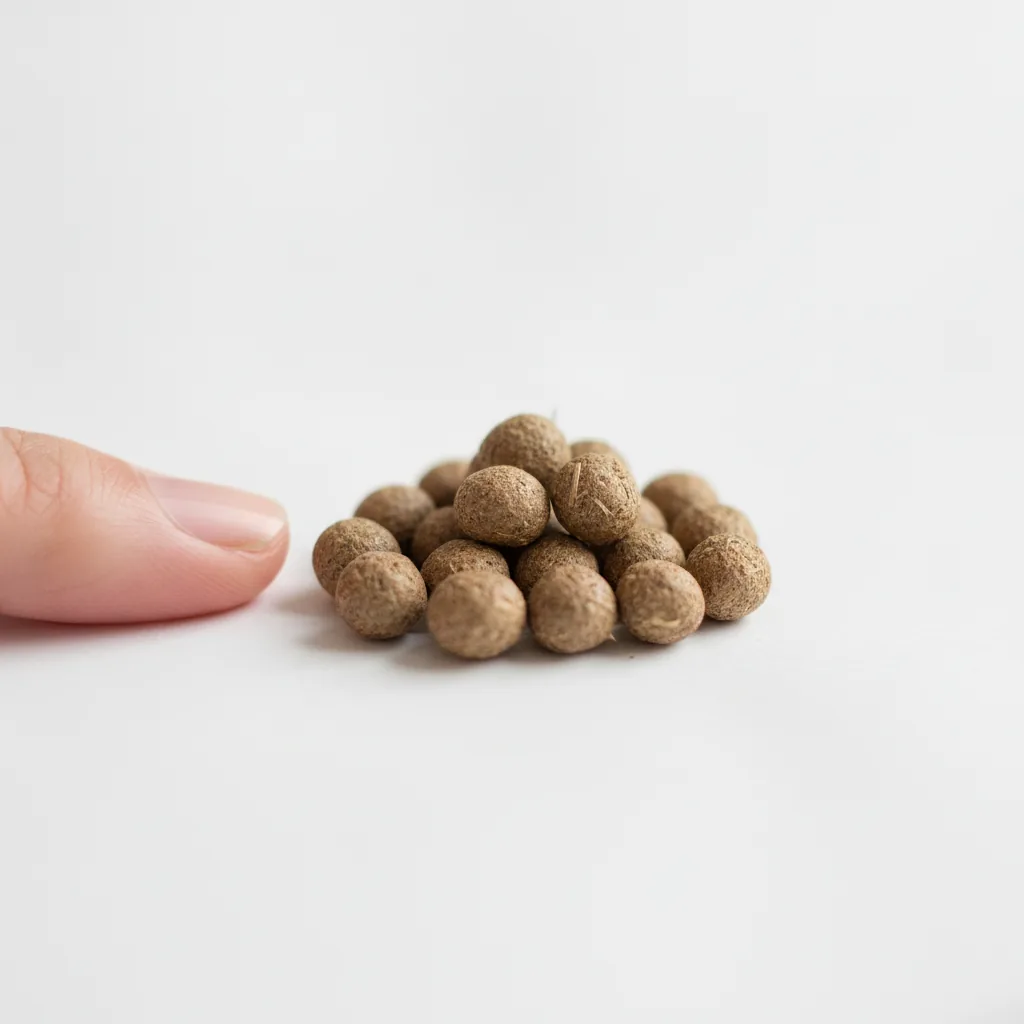
Round, dry pellets about 7.5mm across, up to 300 a day. They barely smell and crumble when squashed.
The UK's RWAF describes healthy faecal pellets as "quite large, about quarter of an inch (.75cm) across", dry, with "bits of chewed up hay in them", adding that "they don't smell at all and should crumble if you squash them".
On quantity, RWAF writes that rabbits "should produce up to 300 droppings every day", which "should be large, round and golden brown, and made up mostly of chewed up hay or grass".
The House Rabbit Society in the US calls them small brown "cocoa puffs" — relatively spherical, somewhat dry and friable, and composed mostly of undigested fibre.
Healthy poo is hay made visible. That is exactly why a change in it reflects the diet and the gut.
What does it mean when droppings get small or scarce?
It is treated as a sign of too little fibre or a slowing gut. Together with a drop in appetite, it is an emergency.
RWAF writes: "If your rabbit starts to produce fewer droppings or if they become smaller, darker and misshapen, sometimes strung together, or joined by undigested fur or hay, there is a problem."
In Japan, an anicom article reviewed by the veterinarian Tetsuya Nagaoka states plainly that a rabbit that has not passed anything for even one day is constipated, and that any change in frequency, volume or size is a signal. It also puts it as an equation — loss of appetite plus no droppings equals danger — and says not to wait and see, but to speak to a vet at once.
RWAF goes further: "If the appetite goes or the poos stop then see a vet now, this is an emergency" — and, bluntly, "Don't wait until tomorrow."
The appetite side of the same picture is covered in "5 Things to Observe When Your Rabbit Isn't Eating".
Are droppings strung together with fur a problem?
They are described as swallowed fur passing through. While it keeps coming, review the hay and the moulting care.
RWAF writes that "if faecals are very small, hard or joined together with fur (string of pearls) there is something that needs to be changed in your rabbit's diet, usually he needs to eat much more hay."
The German rabbit-keeping site Kaninchenwiese explains that during a moult a rabbit swallows its own fur while grooming, producing chains of droppings (Köttelketten), and adds that as long as the chains keep coming out it is unproblematic, but if the fur stays in the gut and blocks it, you must see a vet urgently. Moulting care is covered in "Rabbit Shedding Care: Brushing and the Real GI Stasis Risk".
Is soft, grape-like poo diarrhoea?
Usually it is a caecotroph. The shine, the clustered beads and the strong smell set it apart from hard pellets.
RWAF describes caecals as "soft, shiny and smelly", looking "a bit like a bunch of grapes, small beads all joined together and covered with a slimy coating". The House Rabbit Society likens a normal one to "a dark brown mulberry, or tightly bunched grapes".
PDSA calls them "soft clumps of sticky, dark brown poo" and warns that they are easily mistaken for diarrhoea, noting that it mostly happens at night, so you are unlikely to ever see your rabbit eating them.
anicom's article on caecotrophy notes that they carry vitamins and protein a rabbit cannot do without, and that a rabbit not eating them becomes malnourished. A caecotroph is not waste; it is the second half of the meal.
Kaninchenwiese offers a practical test: while caecotrophs are being passed, normal hard pellets keep coming too, whereas with diarrhoea the normal pellets stop and what comes out is usually lighter in colour.
Do leftover caecotrophs mean something is wrong?
Sources disagree. What they share is a diet review first, and a vet visit if it continues.
PDSA is the strictest: "it's still important to book an appointment with your vet if you find any — rabbits only stop eating their caecotrophs if something is wrong."
RWAF sets an order. If you see caecotrophs often, first make sure the diet is correct; if over-production continues after the diet has been optimised, then seek veterinary advice.
anicom's caecotrophy article splits it into three causes — an unsuitable diet (too many pellets or sugary foods), not being able to reach the anus (obesity, age, injury), and digestive illness — and concludes that an illness may be hiding behind it, so an early appointment is advisable.
Kaninchenwiese is the most relaxed, arguing that leftovers are not always an indicator of disease and can appear temporarily after a change of food, while noting that large amounts call for a check for coccidia and worms.
The views differ, but the action they share is the same: put hay back at the centre of the diet, and if it continues, get it looked at. For the diet side, see "Choosing Hay for Rabbits: Cuttings, Grass Types and Alfalfa".
There is also posture to watch. RWAF says that if you see your rabbit scooping caecals up from the floor, it is time to have its joints examined for arthritis. The House Rabbit Society adds that an overweight rabbit cannot reach down to take the pellets as they emerge.
Does normal poo depend on what the rabbit eats?
It does. Rather than an absolute look, what matters is how it has changed for your own rabbit.
In its health-check guidance RWAF writes: "Rabbit droppings should be fairly large, but may be dark if they have a lot of rich grass in their diet. If they are dark and small then you need to take action. If they change suddenly for any reason, this is a cause for concern." Size and colour are separate indicators.
Feeding culture shapes the baseline here. Kaninchenwiese writes from a tradition of feeding fresh greens and meadow plants, treating large pale hay-based droppings as a sign of too much indigestible material and darker, somewhat smaller ones as ideal. That starting point differs from welfare organisations that put hay at the centre.
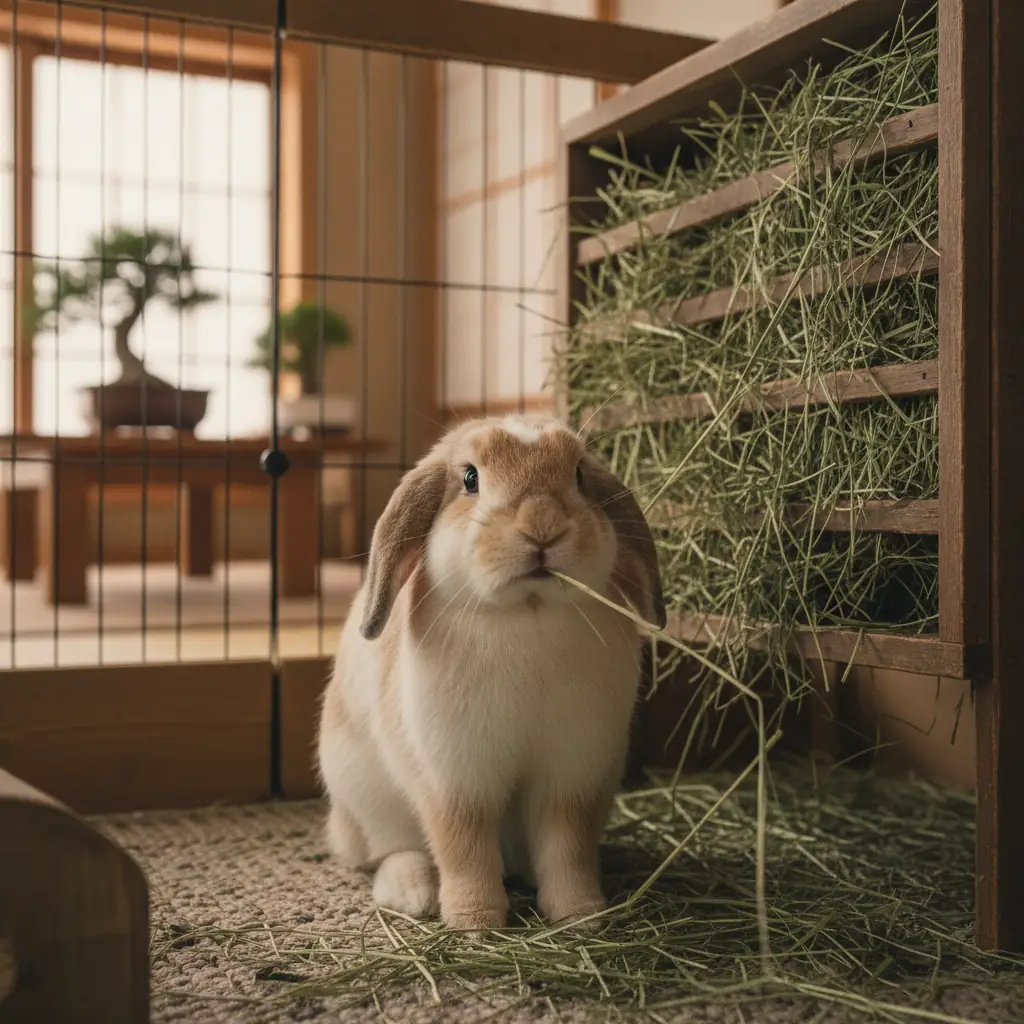
The point is not to compare with someone else's rabbit, but to notice that the shape or amount changed while the diet stayed the same.
What should I do if the poo is watery?
See a vet straight away. It is not something to watch and wait on; untreated, it is described as life-threatening.
RWAF is explicit: "If you spot any watery poos, your rabbit should see a vet at once." PDSA says to "book an appointment with your vet as soon as you notice your rabbit passing diarrhoea or soft faeces", and never to wait and see if they improve, adding: "Never try to treat your rabbit's diarrhoea at home." Taking a sample of the poo to the appointment is said to help.
On unformed, pasty caecotrophs the House Rabbit Society is clear that they are not a primary disease but a symptom of a disorder somewhere in the rabbit's system. The same organisation warns that droppings stuck to the rear end can lead to fly strike.
Daily records make the change in poo visible
Because you see poo every day, a slow change is the one you miss. Only a record can tell you when it started.
Small things help. The vet-reviewed anicom article suggests white litter-tray liners and light-coloured litter, which make changes in droppings and urine easier to see.
The usagi Diary app lets you log food, poo and weight in about thirty seconds. Keeping "it looks smaller today" on record means you can show a vet when it changed. Moulting season stacks several changes at once — see also "Autumn Moulting in Rabbits: Diet, Weight and Warning Signs".
Rabbits differ. When in doubt, a vet's advice comes before anything you try at home.
Keep the record in the usagi Diary app
The log you keep is what you show the vet when something changes. Available on iPhone and Android.
Frequently asked questions
How many droppings should a rabbit pass each day?
RWAF puts it at up to 300 a day: large, round, golden brown and made up mostly of chewed hay. Rather than counting them, watch for a clear drop from what is normal for your own rabbit.
My rabbit's droppings are getting smaller. When should I see a vet?
Droppings that turn small, dark and misshapen, or fall in number, are treated as a warning sign. If the appetite goes as well, or the poos stop, RWAF calls it an emergency and says to see a vet now.
I found soft, grape-like poo. Is that diarrhoea?
Usually it is a caecotroph: shiny, clustered in small beads and strongly smelling. Whether normal hard pellets are still being passed alongside it is the clearest way to tell it from diarrhoea.
My rabbit leaves caecotrophs every day. Does that mean illness?
Sources differ. PDSA says to book a vet appointment whenever you find them; RWAF says to correct the diet first and see a vet if it continues. What they share is a hay-first diet review, then a vet.
The droppings are strung together with fur. Is that a problem?
It is described as swallowed fur passing through with the poo. While it keeps coming out, review the hay and the moulting care. If the poos stop or the appetite drops, see a vet straight away.
Related articles
Spotting Dental Trouble in Rabbits: Eating, Drooling, Face
Rabbit Weight: Weekly Weighing and Reading the Change
Autumn Moulting in Rabbits: Diet, Weight and Warning Signs
Rabbit Heatstroke: Signs, Prevention, and Safe Summer Setup
Rabbit Shedding Care: Brushing and the Real GI Stasis Risk
5 Things to Observe When Your Rabbit Isn't Eating
References
- Digestion / Rabbit Welfare Association & Fund (RWAF, UK) (accessed 2026-09-16) Link
- Gut Slowdown / Rabbit Welfare Association & Fund (RWAF, UK) (accessed 2026-09-16) Link
- Bunny MOT / Rabbit Welfare Association & Fund (RWAF, UK) (accessed 2026-09-16) Link
- Diarrhoea in rabbits / PDSA (People's Dispensary for Sick Animals, UK) (accessed 2026-09-16) Link
- The Mystery of Rabbit Poop / House Rabbit Society (USA), written by Dana Krempels (accessed 2026-09-16) Link
- うさぎのうんちが出ない…は危険信号!うさぎとうんちの関係 [No droppings is a danger signal: rabbits and their poo] / anicom Encyclopedia of Living with Rabbits (Anicom Insurance, Japan; reviewed by the veterinarian Tetsuya Nagaoka / 長岡哲矢) (accessed 2026-09-16) Link
- うさぎは食糞するって本当?食べないときはどうする? [Do rabbits really eat their droppings? What if they stop?] / anicom Encyclopedia of Living with Rabbits (Anicom Insurance, Japan) (accessed 2026-09-16) Link
- Urin- und Köttelkunde [A short study of rabbit urine and droppings] / Kaninchenwiese (German rabbit-keeping site) (accessed 2026-09-16) Link